
For children who understand, but the words don't come
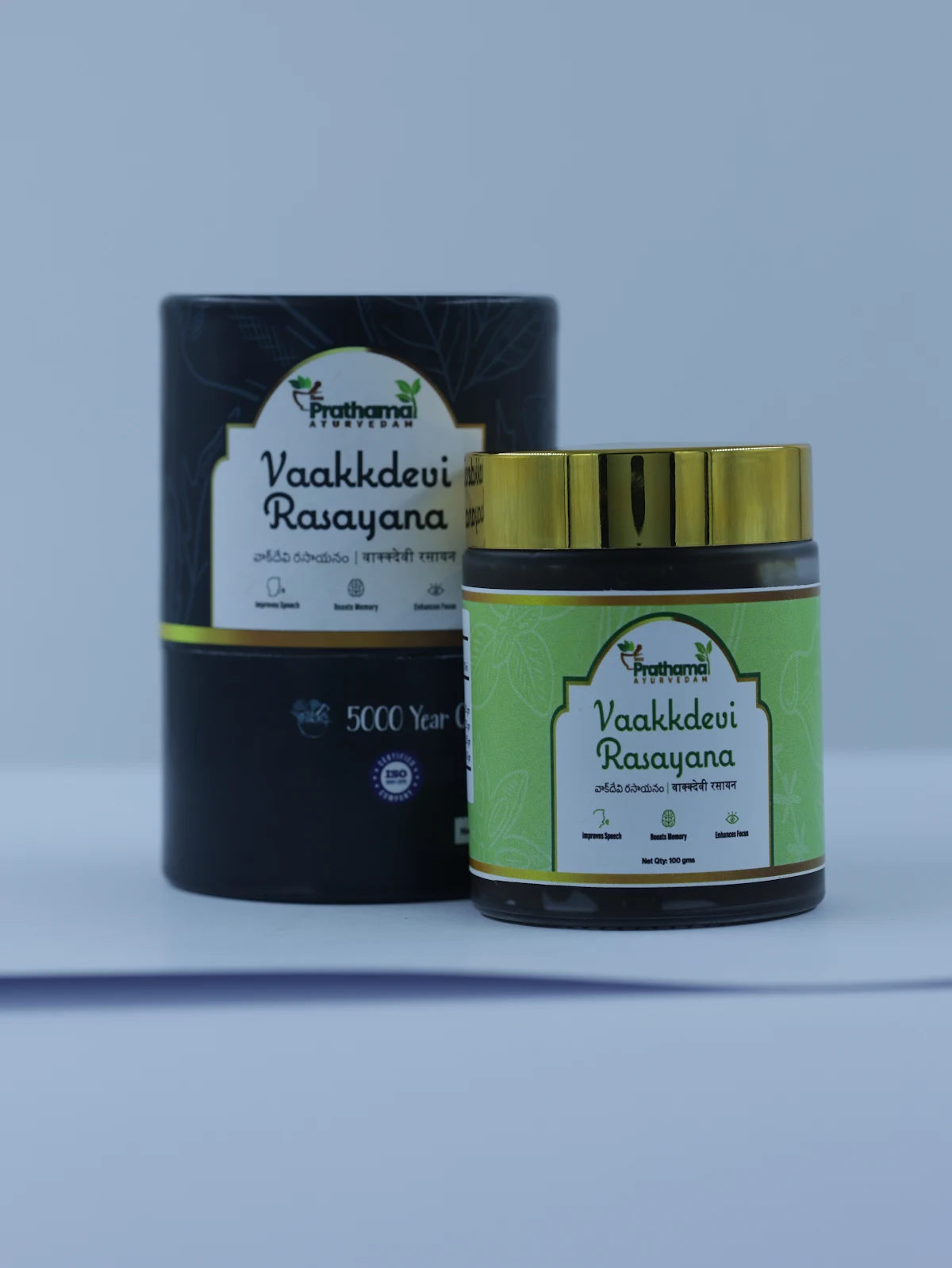
Vaakkdevi Rasayana
Sounds · Words · Their own voice. Your child knows what they want and understands what you say, but when it is time to speak, the words just don't come out. Vaakkdevi Rasayana is a herbal paste placed on the tongue, made to wake up the mouth and clear the way for speech. It is Dr. Santhisree Bheesetti's own formulation, refined over 15+ years of practice as an Ayurvedic Child Neurocare Expert.
- For children who are non-verbal, use only a few words, or speak unclearly
- Applied on the tongue, so the herbs work right where speech begins
- Helpful when the tongue feels thick, heavy or slow to move
- Suitable from 6 months of age, with our doctor’s guidance
- Purified Vacha, Akarkarabha, Jatamansi, Jyotishmati and Trikatu in honey
Choose your pack
Vaakkdevi Rasayana
Secure online payment. Delivered across India. Not sure which pack? WhatsApp us on +91 99897 59719. Our doctor guides the dose for each child.
Sound familiar?
"My child understands everything, but speaks very little"
These are the words Dr. Santhisree hears from parents every week.
Few or no words
Your child points, pulls your hand or cries to ask for things, because the words won’t come.
Single words, no sentences
"Water", "come", "mama" are there, but joining two words together isn’t happening yet.
Unclear speech
Your child tries to talk, but even family members find it hard to understand.
A thick, heavy tongue
The tongue looks thick and moves little. The mouth is often open, or there is drooling.
Rhymes, but not real talk
Your child can repeat rhymes or songs but doesn’t speak on their own.
"I just want to hear what they need"
Every parent wants their child to be able to say what they want, in their own words.
The modern view
How a word is built
Saying even one word, like "water", takes a whole team inside the brain and the mouth. When any one member of the team is slow, the word gets stuck.
- 1Wernicke’s areaUnderstands words
- 2Broca’s areaPlans what to say
- 3Motor cortexMoves the tongue, lips and jaw
- 4BrainstemWhere the tongue’s nerves connect
- 5CerebellumKeeps speech smooth and well timed
Five steps, from hearing to speaking
Dr. Santhisree explains speech to parents in five simple words. Ayurveda had a name for each step long before brain scans.
Many of our children are strong in the first steps. They understand a lot. The words get stuck at "Express" and "Execute", where the urge to speak and the movement of the tongue come in. That is exactly where Vaakkdevi is meant to help. The mouth also talks back to the brain: every touch, taste and tingle on the tongue travels up to the brainstem and the brain. The more alive the mouth feels, the more the brain uses it.
The Ayurvedic view
Speech is more than the tongue
Ayurveda calls speech Vaak. It sees it as the result of a clear mind, a free-flowing Vata, a responsive tongue and good digestion that feeds the brain. When one of these is weak, words struggle to come out.
Prana Vata, the starter
Prana Vata sits in the head. It takes in what the child hears and gives the push to start any action, including speaking. When it is weak or scattered, the child may understand but not try to speak.
Udana Vata, the voice
Udana Vata moves upward from the chest to the throat and mouth. It carries a thought out as voice and words, and gives the effort and strength to speak.
Bodhaka Kapha, the tongue
Bodhaka Kapha keeps the tongue moist, sensitive and ready. When it becomes too heavy, the tongue feels thick and slow, saliva pools, and speech comes out unclear.
When Kapha covers Udana
Ayurveda calls this Avarana. Heavy Kapha sits over Udana Vata like a lid, so the voice can’t rise and the words stay inside, even when the child knows what to say.
Medha, the learning mind
Medha is the power to grasp, hold and recall. Tarpaka Kapha nourishes it and Sadhaka Pitta gives meaning. A strong Medha helps a child remember new words and use them.
Agni, the fire that feeds the brain
Good digestion turns food into nourishment for every tissue, including the brain. When Agni is weak, the body makes heaviness instead of nourishment, and that heaviness reaches the mind too.
Three kinds of children we often see
Two children with "speech delay" can need very different care. Most children are a mix, which is why our doctors ask about sleep, stools and appetite, not only words.
The quiet child
Calm and slow to start, often has colds or mucus, and understands far more than they say. Here heaviness (Kapha) is sitting over the voice.
The restless child
Always moving, sleeps poorly, attention jumps, may speak fast or in jumbled sounds. Here Vata is high and scattered.
The child with little drive
Tires easily, soft muscles, few words and little urge to talk. Here the deep nourishment of body and brain is low.
One more thing parents should know: Kapha is not the enemy. Balanced Kapha gives the brain stability, memory and a well-moistened tongue. Our aim is never to "dry out" a child, only to bring Kapha back to balance so it nourishes the voice instead of covering it.
Why on the tongue
Waking up the speaking tongue
In Ayurveda the tongue is the organ of speech (Vakindriya) and a gateway to the brain. It is richly linked by nerves to the brainstem and the brain. That is why Vaakkdevi is a soft paste in honey placed right on the tongue, not a syrup that is quickly swallowed.
What happens, in Ayurveda
- Vacha, Akarkarabha and Trikatu (Shunthi, Pippali and Maricha) are pungent, sharp and warming. They scrape away the excess Kapha that makes the tongue thick and dull.
- Ayurveda has long used Akarkarabha and Vacha for Jihva Jadya, a slow, heavy tongue.
- A lick on the tongue (Leha) is also the classical way of giving medicine to young children, just like Swarna Prashana.
- Lighter Kapha lifts the lid off Udana Vata, so the voice can rise.
- Honey carries the herbs deep into the tissues and is itself Kapha-reducing.
- Jatamansi and Jyotishmati, both Medhya herbs, steady the mind and support memory for new words.
What happens, in the body
- The tingle you feel from pepper and ginger comes from natural compounds (piperine in Pippali and Maricha, gingerols in Shunthi) that switch on warmth and tingle sensors on the tongue.
- Akarkarabha has been used for centuries for its tingling effect and the flow of saliva it brings.
- These signals travel along the tongue’s nerves to the brainstem and the brain, so the mouth is felt more clearly.
- A mouth that is felt is a mouth that moves. Children often start licking, moving the tongue and making sounds more.
When the tongue is thick and heavy
Some children have a tongue that looks thick and barely moves. The mouth stays open, there may be drooling, chewing is slow, and the few words that come are unclear. In Ayurveda this is heavy Bodhaka Kapha. In modern terms, the tongue has low muscle tone and the brain receives weak signals from it. Vaakkdevi works on both: its warming herbs lighten the heaviness, and the daily tingle keeps sending fresh signals from the tongue to the brain. In our clinic, the tongue often becomes lighter and more active first, and clearer sounds follow.
Two languages, one child
Ayurveda and neuroscience, side by side
For doctors and curious parents: how the Ayurvedic ideas on this page line up with what brain science describes. We connect them, we don’t equate them. Udana Vata is not "Broca’s area" and Prana Vata is not one nerve. Modern science describes structures; Ayurveda describes how they work together.
| Ayurveda | What it does | Closest modern idea |
|---|---|---|
| Prana Vata | Takes in sound, starts the urge to act | Auditory attention, motivation to communicate |
| Udana Vata | Carries thought out as voice and words | Speech motor output, breath and voice control |
| Vyana Vata | Coordinates movement through the body | Motor planning and sequencing of sounds |
| Bodhaka Kapha | Keeps the tongue moist, sensitive, ready | Oral sensation, saliva, tongue muscle tone |
| Kapha covering Udana (Avarana) | Heaviness blocks the voice from rising | Low oral tone, weak drive to start speech |
| Tarpaka Kapha | Nourishes and steadies the brain | Brain nourishment, steady networks |
| Sadhaka Pitta | Gives meaning, links feeling and thought | Language understanding, emotional meaning |
| Medha | Grasp, hold and recall | Learning and word memory |
| Agni and Ama | Digestion and its leftovers | Gut–brain connection, inflammation |
Our 11 Functional Brain Systems
The five systems Vaakkdevi supports
Dr. Santhisree looks at every child through 11 brain systems. Speech depends on several of them working together. These are the five Vaakkdevi focuses on.
Speech and expression
In Ayurveda: Udana and Prana Vata, Bodhaka Kapha
In the brain: The network that plans words and sends them to the mouth
How Vaakkdevi helps: Lifts heaviness so the voice can rise and words can come out
Oral and sensory awareness
In Ayurveda: Bodhaka Kapha
In the brain: How clearly the brain feels the tongue, lips and cheeks
How Vaakkdevi helps: The daily tingle wakes up the mouth so the brain notices it
Motor planning
In Ayurveda: Vyana Vata
In the brain: Putting sounds in the right order, smoothly
How Vaakkdevi helps: A more active tongue makes it easier to try and repeat sounds
Attention and listening
In Ayurveda: Prana Vata, Sadhaka Pitta
In the brain: Tuning in to voices and staying with them
How Vaakkdevi helps: Vacha and Jyotishmati sharpen focus on sound and speech
Memory and learning
In Ayurveda: Medha, Tarpaka Kapha
In the brain: Holding on to new words and using them again
How Vaakkdevi helps: Jatamansi and Jyotishmati, both Medhya herbs, support recall
Good digestion (Agni) sits under all of these. The warming Trikatu herbs also gently support digestion, so the nourishment reaches the brain.
What Dr. Santhisree has seen
First the mouth wakes up, then the words come
Every child moves at their own pace. This is the usual order of change we see in our clinic.
These are observations from our own practice, not a promise. Results differ from child to child.
What’s inside
Nine ingredients, one purpose
Every herb is chosen to wake up speech. Vacha is purified by the classical Shodhana method before use. Made in our own GMP-certified unit in Kukatpally, Hyderabad.
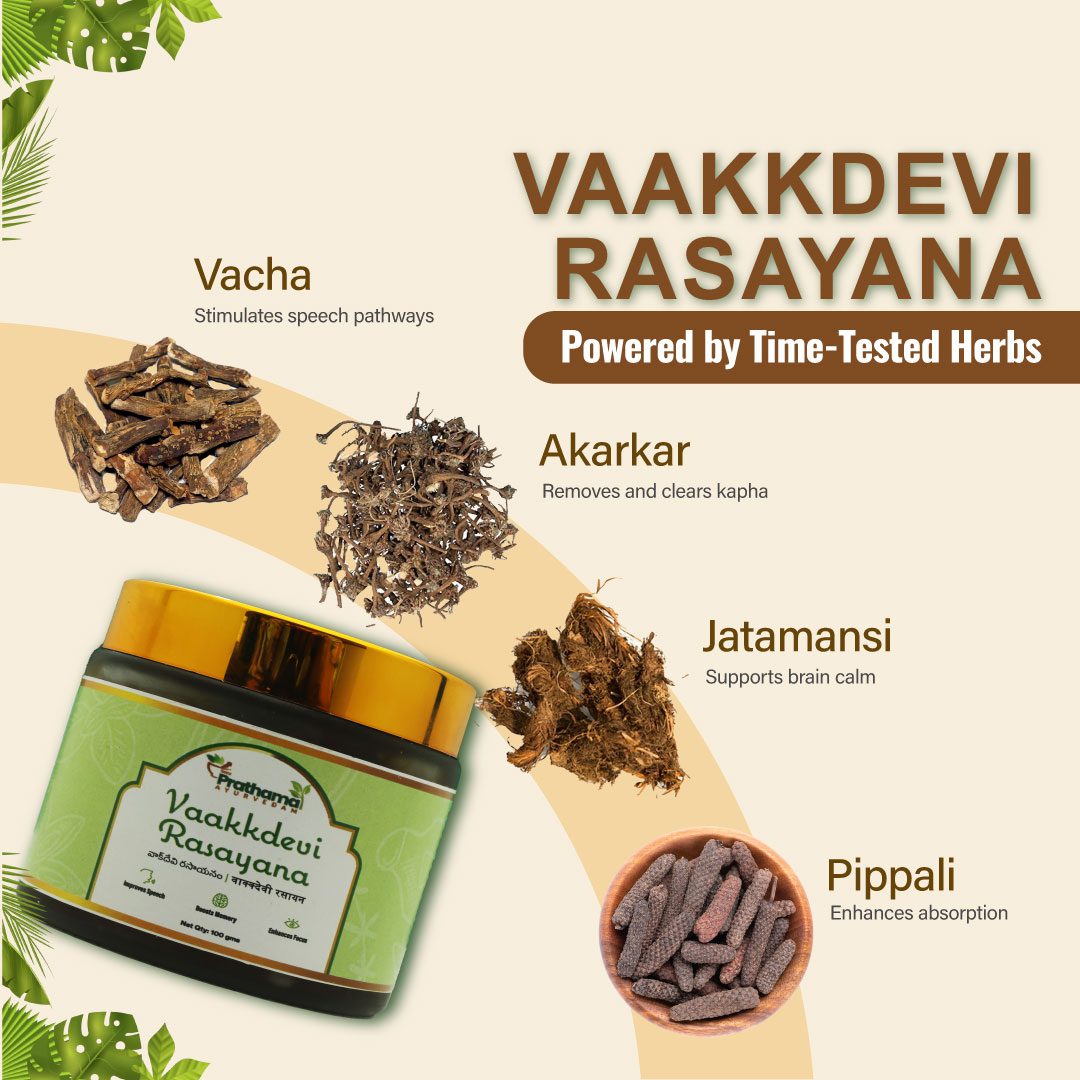
Vacha (purified) Acorus calamus
The main herb for speech. Sharp and clearing, it opens the channels of speech and wakes the mind.
Akarkarabha Anacyclus pyrethrum
Brings a strong tingle and a flow of saliva. Wakes up a dull, heavy tongue.
Jatamansi Nardostachys jatamansi
Calms and steadies a restless mind.
Jyotishmati Celastrus paniculatus
Known as the "light of the mind". Supports focus and memory.
Shunthi, Pippali and Maricha Trikatu: dry ginger, long pepper, black pepper
Warming and sharp. They clear heaviness, add to the tingle and help the other herbs work.
Nagarmotha Cyperus rotundus
Light and drying. Supports digestion.
Honey Madhu
The carrier. It takes the herbs deep and reduces Kapha.
How to give
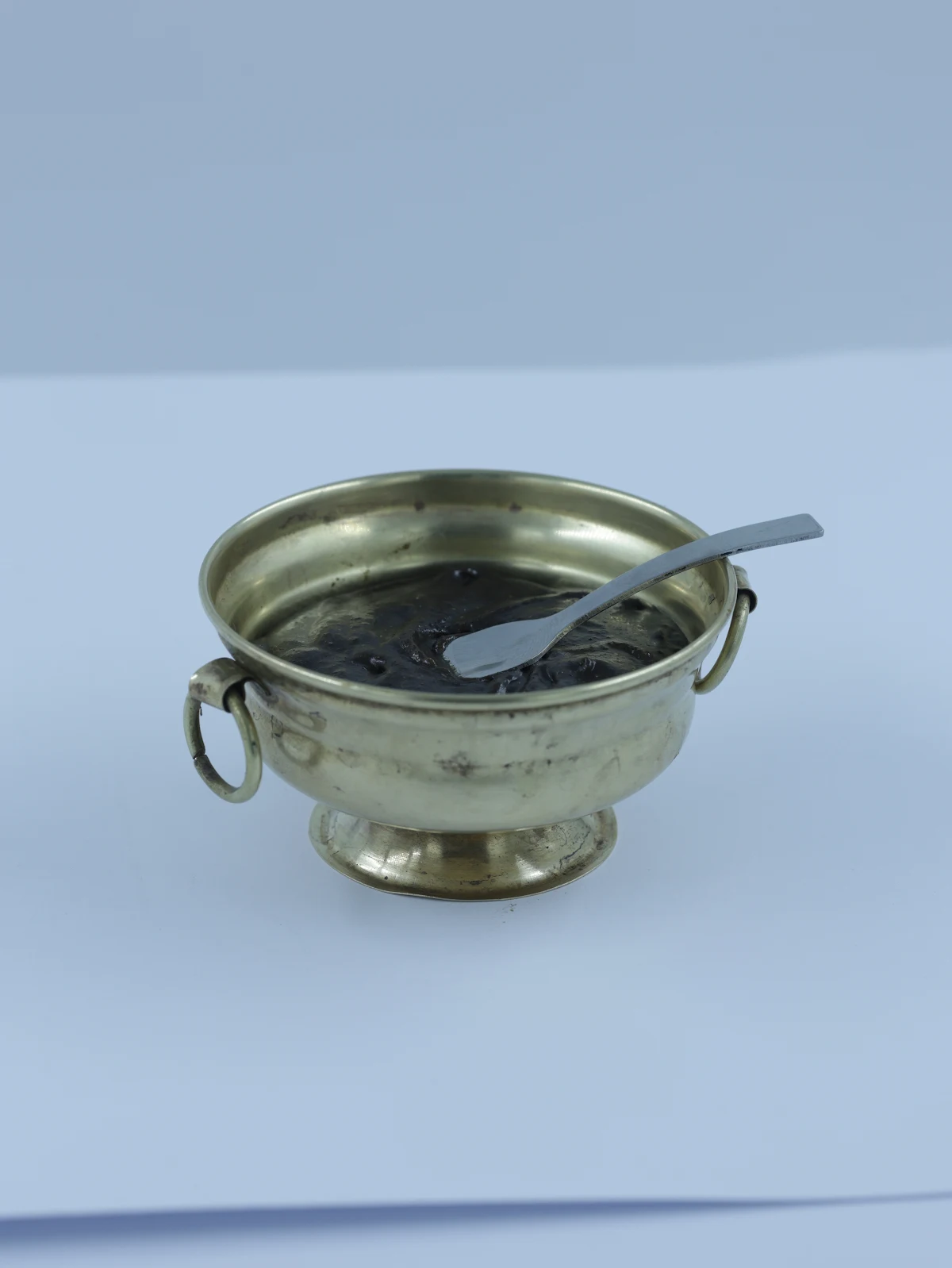
A tiny amount, right on the tongue
It takes less than a minute, two or three times a day.
Best suited for children who
- Understand well but speak very little or not at all
- Use single words but don’t join them
- Speak unclearly
- Have a thick, heavy tongue, an open mouth or drooling
- Find chewing hard or don’t like textures in the mouth
Please keep in mind
- Suitable from 6 months of age.
- Most families continue it for 1 to 2 years. Some children need up to 3 years.
- Give it every day. Regular use matters more than quantity.
- The 50 g jar lasts about 15 days and the 100 g jar about 30 days.
- Please talk to our doctor before starting, so the dose suits your child’s age and needs.
Small things at home that help
- Talk and play every day. Name things, wait for your child to respond, and celebrate every sound.
- Keep screens low and switch off background TV. If your child watches, sit and talk about what you see.
- Keep a regular bedtime. A settled mind takes in language better.
- Keep meals calm, with warm, simple home food. Don’t feed your child while they are crying or upset.
When to talk to a doctor
- No babbling or gestures, like pointing or waving, by 12 months
- No words by 16 to 18 months
- Fewer than 50 words, or no two-word phrases, by 2 years
- Doesn’t seem to understand simple instructions
- Loses words or skills they once had
These are not reasons to panic. They are reasons to start early.
Questions parents ask
Before you start
Simple answers to the questions we hear most.
Will this make my child talk?
No medicine can promise words by a certain date, and we won’t. What Dr. Santhisree has seen over 15 years is this: with daily use as part of our care, many children start making more sounds within about 3 months, and many who came without words begin asking for what they need within about a year.
Is the tingling safe?
Yes. The tingle comes from the natural pungent herbs and fades within a few minutes. That tingle is what wakes up the tongue. If you notice anything unusual, stop and message our team.
My child doesn’t like anything near the mouth. What do I do?
Many children with speech delay are sensitive around the mouth. Start with a tiny amount, keep it playful, give a sip of water after, and message our team for tips that suit your child. Most children get used to it within a week or two.
Is it only for children with Autism?
No. It is also for children with speech delay, few words, unclear speech or a heavy tongue, whatever the reason.
My older child has Autism. Can I start it for my younger one?
Yes, from 6 months of age, under our doctor’s guidance. Message our team first so we can set the right amount for your little one and help you watch every milestone.
Can my child take it with other medicines?
Usually yes. Please tell our doctor what your child is already taking so we can plan it safely.
Do I need a consultation before buying?
Not within India. Every parent gets free WhatsApp guidance on how much to give. For a full assessment, including Nadi Pariksha, you can book a consultation with Dr. Santhisree.
We live outside India. Can we order?
Our medicines are sent abroad only after an online consultation and prescription from Dr. Santhisree. Message us on WhatsApp and our team will arrange it.
Which pack should I buy?
The 100 g jar lasts about a month and is better value. The 50 g jar is good if you want to try it first.
Read more
Want to go deeper?
These articles explain speech, the mouth and Ayurveda in more detail.
For doctors and researchers
The neuroscience on this page summarises current reviews. The links between Ayurveda and neuroscience are Dr. Santhisree Bheesetti’s clinical interpretation.
- Simonyan K, Ackermann H, Chang EF, Greenlee JD. New developments in understanding the complexity of human speech production. J Neurosci. 2016;36(45):11440–11448. Link
- Simonyan K, Horwitz B. Laryngeal motor cortex and control of speech in humans. Neuroscientist. 2011;17(2):197–208. Link
- McNamara FN, Randall A, Gunthorpe MJ. Effects of piperine, the pungent component of black pepper, at the human vanilloid receptor (TRPV1). Br J Pharmacol. 2005. Link
- Okumura Y, et al. Activation of TRPV1 and TRPA1 by black pepper components. Biosci Biotechnol Biochem. 2010;74(5):1068–1072. Link
- Fuard F, Zarnigar, Jamaldeen FN. A complete review of ethnopharmacology, pharmacology and phytochemistry of Anacyclus pyrethrum DC. Trad Integr Med. 2025;10(3):311–339. Link
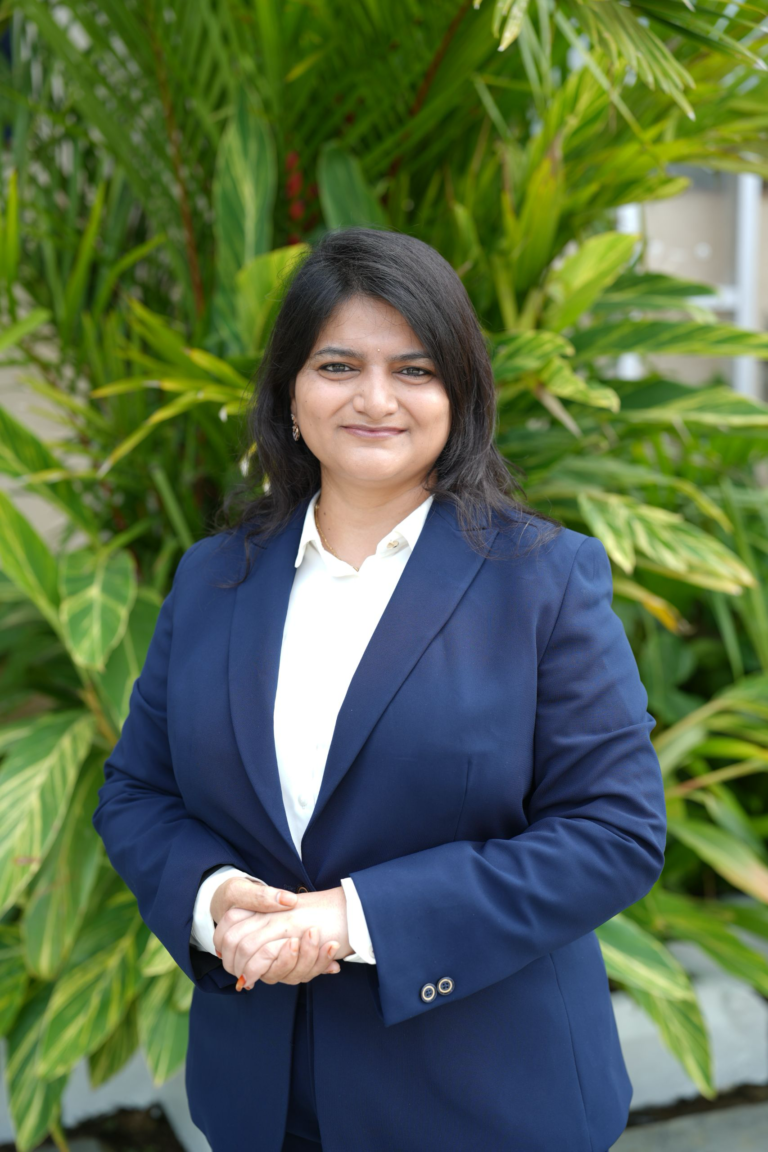
Meet the doctor
A mother first, a doctor next
"When I see a child, I think as a mother first and as a doctor next."
Dr. Santhisree had been practising since 2011 and had treated hundreds of children when her own son, at about 15 months of age, began losing words, eye contact and developmental milestones. Searching for answers, she began studying children far more deeply: their speech, behaviour, attention, sensory needs, sleep and digestion. Through Nadi Pariksha, she found that children with the same diagnosis often have completely different underlying imbalances, and with personalised medicines and Panchakarma, she saw remarkable changes in her son. Since then, she has dedicated her practice completely to children like him. Vaakkdevi Rasayana was born from that journey, and she has refined it for the children in her care for over 15 years.
Founder & Chief Physician, Sree Prathama Ayurvedam
- B.A.M.S., Rajiv Gandhi University of Health Sciences (2010)
- 15+ years in paediatric neurodevelopment
- Developer of the Ayurveda Brain Type and the 11 Functional Brain Systems Framework
- Published research: IJMSIR, December 2024 (40 children)
- Cover story, Silicon India magazine
- International conferences in the USA and Bangkok
Recognition
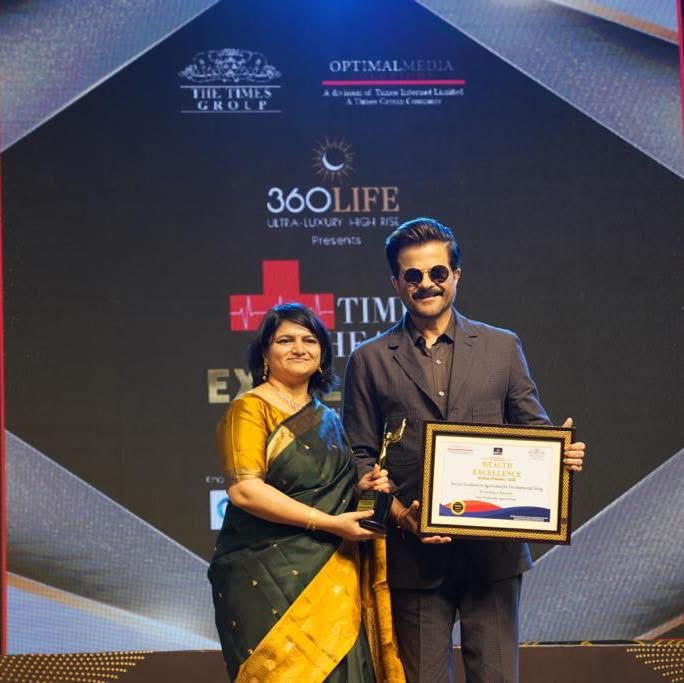
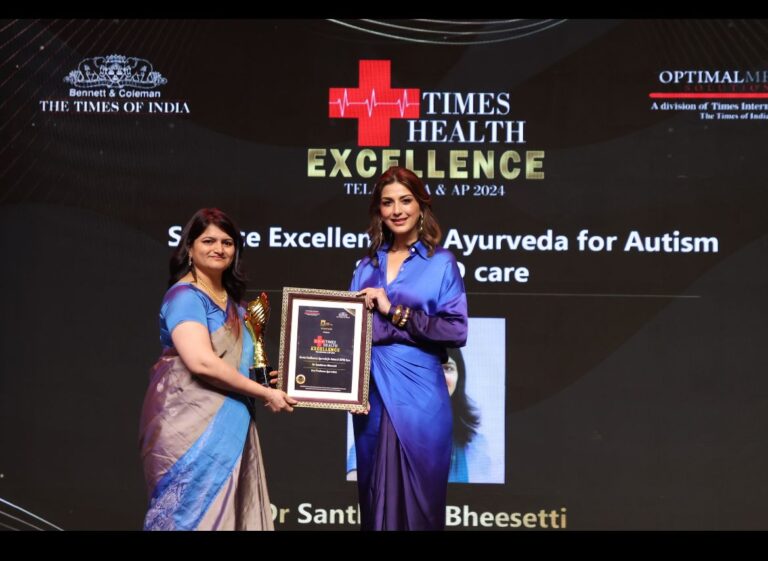
Times Health Excellence Award, two years in a row
Service Excellence in Ayurveda, Telangana & AP: for Developmental Delay in 2023, presented by Anil Kapoor, and for Autism & ADHD Care in 2024, presented by Sonali Bendre.
#DontWaitStartEarly
Don’t wait. Start early.
The early years are when speech grows fastest. Talk to us about whether Vaakkdevi Rasayana suits your child.