
Speech delay › Speech sound disorders
“She talks all day, but only we can understand her.”
Speech & language family
Speech Sound Disorders in Children
Your child has plenty to say. They make sentences, tell you about their day, and ask questions. But many words come out unclear: “tat” for “cat”, “poon” for “spoon”, or sounds that seem to be missing altogether. Family members understand, but other people often don’t. This may be a sign of a speech sound disorder, where a child has difficulty producing speech sounds or using them correctly in words, beyond what is expected for their age. Dr. Santhisree Bheesetti, Ayurvedic Child Neurocare Expert with 15+ years of experience, supports children like yours, and their families, towards clearer speech.
Signs parents often notice
The words are there, the sounds are not quite right
Speech sound disorders affect how clearly a child’s words come out. These are some of the things parents commonly notice.
Swaps one sound for another, like “tat” for “cat” or “wabbit” for “rabbit”
Leaves out sounds, like “poon” for “spoon” or “ba” for “ball”
Has trouble with certain sounds, such as s, r, l or th, or has a lisp
Is understood at home, but often not by teachers, relatives or other children
Gets upset, or stops talking, when people ask them to repeat
Speech sounds thick, nasal or mumbled, especially when they have a cold
Young children often simplify sounds while they learn to talk, and many of these changes fade with age. Noticing a few of these signs does not mean your child has a speech sound disorder. Only a proper assessment can tell what is going on, with us, a developmental paediatrician or a speech-language pathologist.
Different kinds
Not every unclear word has the same cause
Speech sound disorders are often grouped in these ways. They can be hard to separate, and a child may show more than one.
Difficulty making a particular sound, such as a lisp on “s”. The same sound is usually affected wherever it appears.
Predictable patterns of sound errors, such as front sounds replacing back ones (“tat” for “cat”) or dropping one sound from a pair (“poon” for “spoon”).
In some children, the same word comes out differently on different tries, even without the movement difficulties seen in apraxia.
Parents usually understand about half of what their child says at around 2 years, about three-quarters at 3, and nearly all of it by 4. Most children can say most sounds of their language by about age 5, though some sounds take longer.
Please have your child checked soon, by us, a developmental paediatrician or a speech-language pathologist, if your child:
- Is hard for family to understand by age 3
- Is hard for others to understand by age 4
- Still has many unclear sounds after age 5
- Avoids talking, or is teased, because of unclear speech
- Has frequent ear infections, snores, or breathes through the mouth
- Has lost words or skills they used before
A hearing test is also important.
Why it happens
What can make speech sounds harder to learn?
In most children there is no single known cause. These are some of the things that may play a part.
Ear infections and hearing
Repeated ear infections with fluid behind the eardrum can muffle sounds while a child is learning them.
Family history
Speech and language difficulties often run in families.
Birth and early health
Being born early, low birth weight or difficulties around birth can add to the risk.
More common in boys
Boys are more likely than girls to have speech sound difficulties.
Language difficulties
Some children also find understanding or using language harder, which needs attention too.
Traditional Ayurvedic interpretation
In traditional Ayurvedic interpretation, clarity of speech is linked mainly to the functions of Udana Vata, Vyana Vata and Bodhaka Kapha. This is explained further down this page.
Traditional Ayurvedic interpretation
Clear speech needs movement, moisture and balance
From an Ayurvedic perspective, speech sound difficulties may be interpreted through the functional relationship between Udana Vata, Vyana Vata, Bodhaka Kapha and the balance of Kapha in the head and throat. Udana Vata drives speech and gives the voice its strength. Vyana Vata guides the precise placement of the lips and tongue. Bodhaka Kapha keeps the tongue and throat moist and supple, and supports the voice. Classical Ayurveda describes Minmina, speech that is unclear or nasal, and relates it to Vata being covered by Kapha in the channels of speech.
Minmina: Kapha Avarana of Udana Vata
When excess Kapha makes speech thick and unclear
- Speech sounds thick, nasal or mumbled
- Extra saliva, or the mouth often kept open
- Frequent colds, a blocked nose, snoring or ear trouble
- A heavier, slower child, who may dislike chewing
Care focus: clearing Kapha from the head and throat, so that Udana Vata can work freely.
Udana–Vyana Vata Vaishamya
When restless Vata makes speech rushed and imprecise
- Talks fast, and sounds get dropped or blurred
- Speech becomes less clear when excited or tired
- Dry lips and mouth, constipation or light sleep
- A quick, restless child who finds it hard to slow down
Care focus: calming and grounding Vata, and steadying the movements of speech.
These are general patterns from traditional Ayurvedic interpretation, not a way to judge your own child. Many children show a mix of both. Through Nadi Pariksha, developmental history, clinical observation and assessment of digestion, sleep, sensory responses and behaviour, we develop an individualised Ayurvedic care plan.
The 11 Functional Brain Systems Framework
Clear speech draws on several systems
Dr. Santhisree’s 11 Functional Brain Systems Framework looks at the whole child. These are the systems most closely linked to speech sound difficulties.
Not every child has difficulty in all of these. The assessment shows which systems need support in your child.
How we help
Clearing the channels, steadying the movements
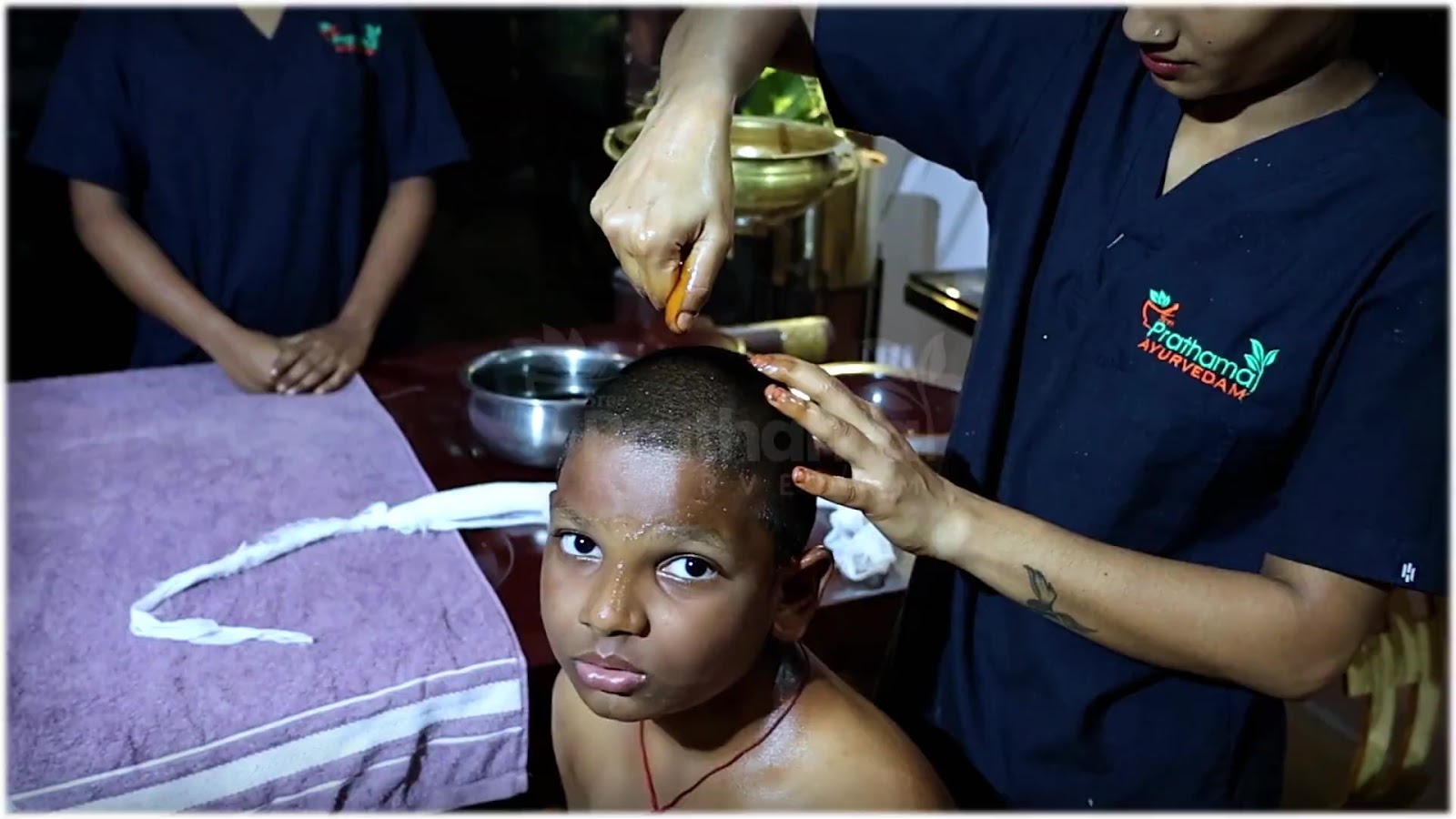
- NasyaMedicated drops through the nose, which Ayurveda sees as the gateway to the head. Used to clear excess Kapha from the head and throat and support Udana Vata.
- GandushaHolding medicated liquid in the mouth, for older children who can do it safely, to support the tongue, mouth and voice.
- Shiro Abhyanga and ThalamWarm medicated oil or herbal paste on the head, to nourish the senses.
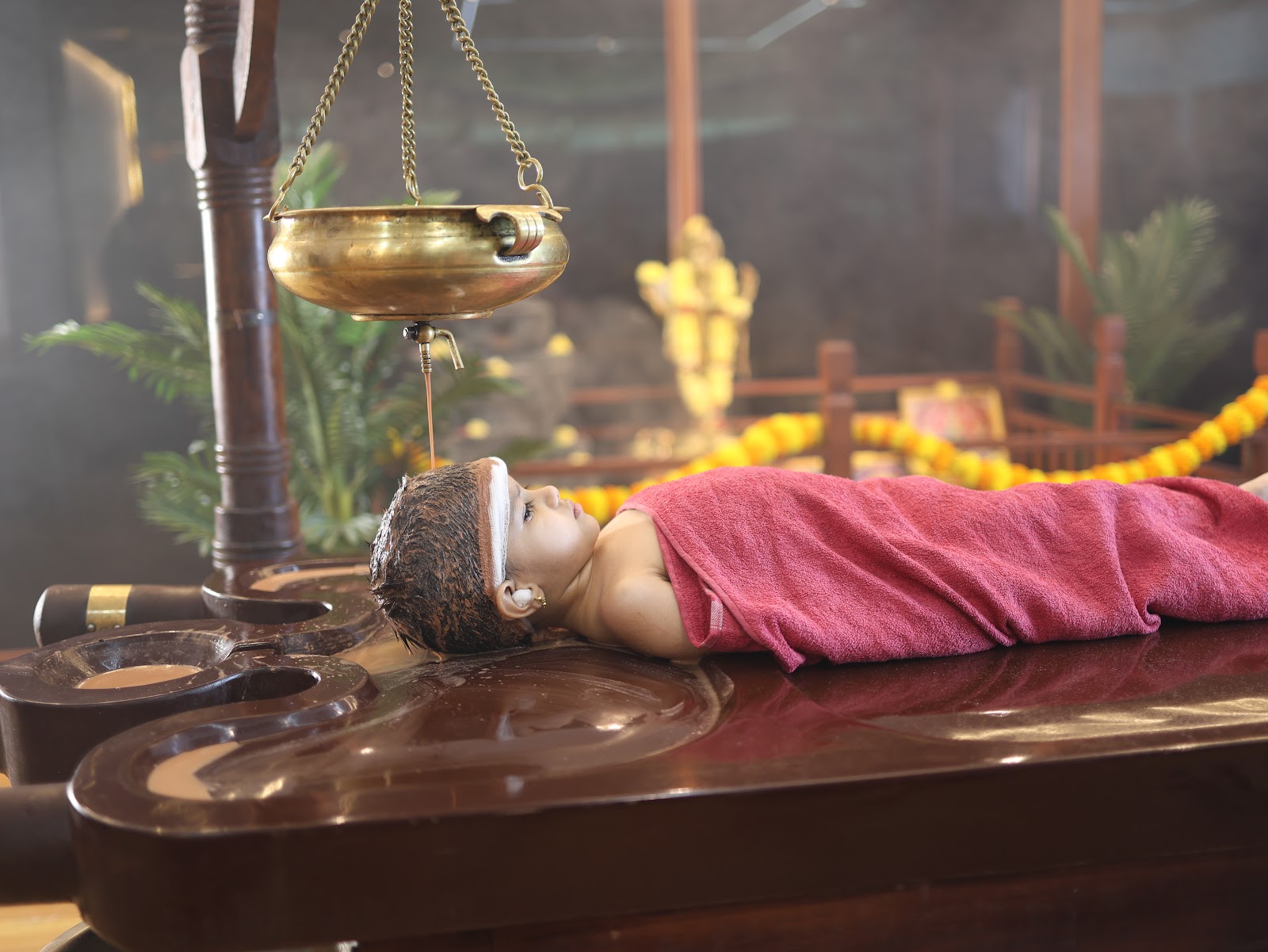
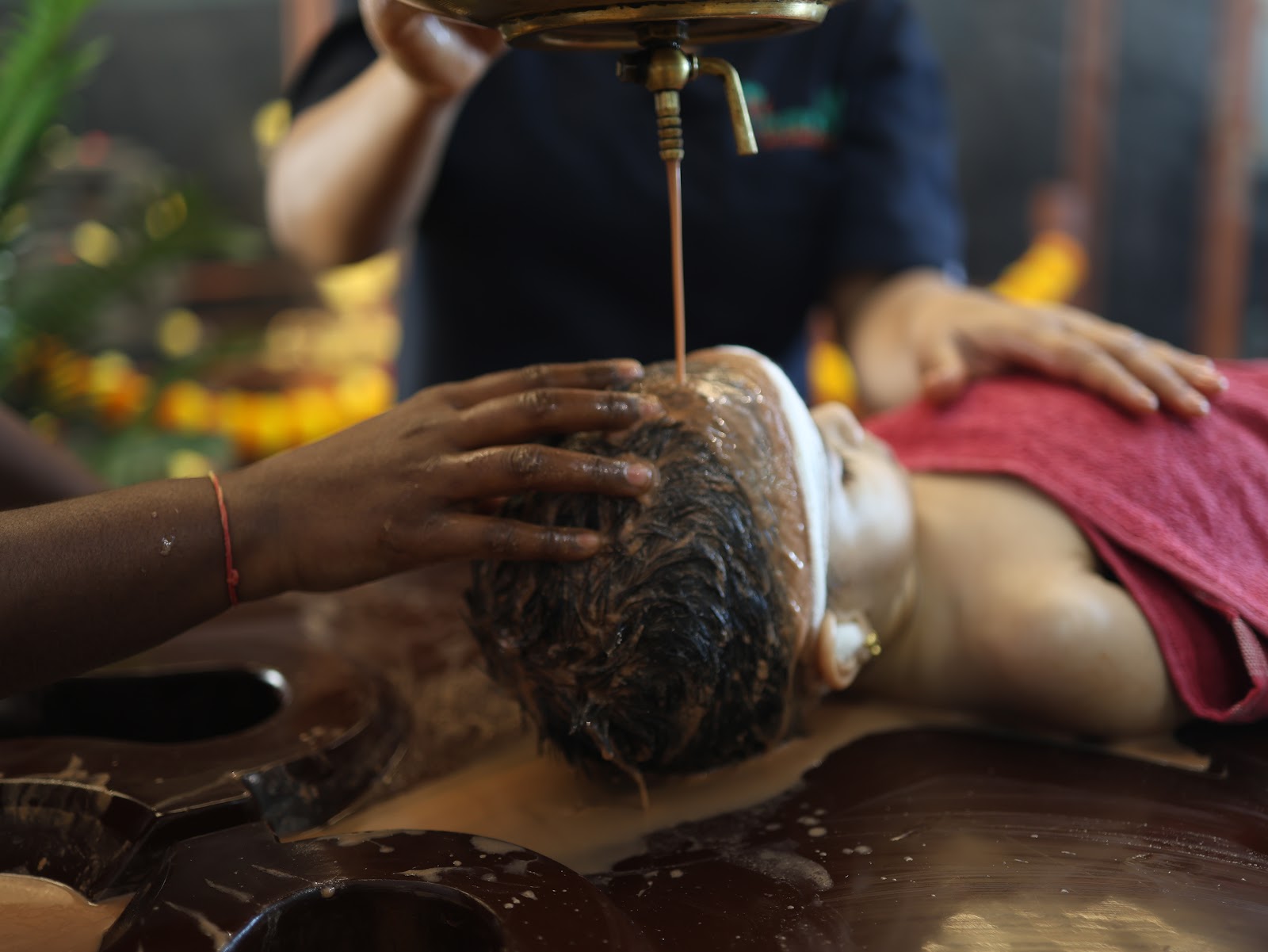
- Shirodhara or TakradharaA steady stream on the forehead, to settle a restless Vata.
- Vasti and AbhyangaTo balance Vata at its root and support the whole body.
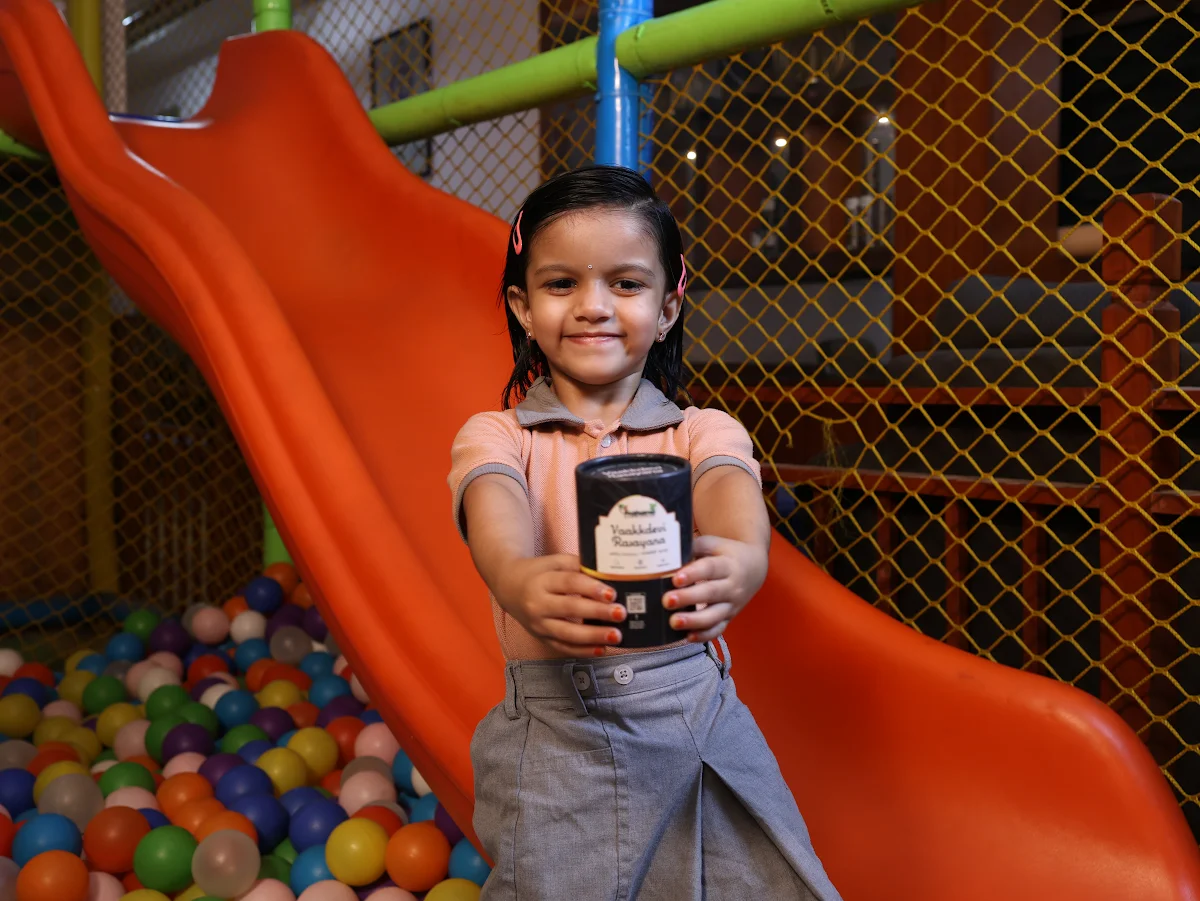
- Customised medicinesMedicines made in our own AYUSH-licensed unit with Medhya Rasayana herbs, such as Vaakkdevi Rasayana, chosen for your child’s pattern.
This page is for general information and is not a diagnosis. All therapies and medicines are given only as advised by Dr. Santhisree Bheesetti after Nadi Pariksha. Not every child needs every therapy.
Assessment and follow-up
How we understand your child, and track progress
What we look at
- Which sounds your child finds hard, and in which positions in a word
- Whether the errors follow a pattern, or change from try to try
- How much of your child’s speech family and others understand
- How well your child understands and uses language
- Tongue, lip and jaw movement, and the mouth at rest
- Ear infections, colds, snoring and mouth breathing
- Hearing history and any earlier hearing tests
- Nadi Pariksha, along with digestion, sleep and behaviour
If needed, we may suggest a hearing test or an assessment by a speech-language pathologist.
What we watch for together
- New sounds your child can say
- Fewer swapped or missing sounds
- Being understood by more people, not only at home
- Clearer speech even when tired or excited
- Fewer colds and a clearer nose
- More confidence to speak
Each child moves at their own pace. We note every small step, and adjust the plan as your child grows.
Start today at home
Six ways to help at home
How you respond to unclear words can make a big difference to your child’s confidence.
Say it back, clearly
Instead of correcting, repeat the word the right way, naturally.
Child: “Tat!” You: “Yes, a cat!”
Never make them repeat on demand
“Say it again, properly” makes many children stop talking.
Talk a little slower
Speak slowly and face your child, so they can hear and see each sound.
Play listening games
Rhymes and sound games, like finding things that start with “b”, help children hear differences between sounds.
Warm, light meals
Go easy on cold, heavy and very sweet foods, especially at night, if your child often has colds or a blocked nose.
Read aloud every day
Hearing clear speech in stories builds a child’s sound library.
From research
What research tells us about speech sounds
These studies are about how children learn speech sounds in general. They are not studies of Ayurvedic treatment.
four-year-olds had a speech sound disorder, in a study of nearly 1,500 children in Australia.
In the same study, about 4 in 10 of these children also had language difficulties, which is why we look at language too.
A review of over 26,000 children across 27 languages found that most children say most consonants of their language correctly by about age 5, with individual variation.
- Eadie P et al. Speech sound disorder at 4 years: prevalence, comorbidities, and predictors in a community cohort of children. Dev Med Child Neurol. 2015. doi:10.1111/dmcn.12635
- McLeod S, Crowe K. Children’s consonant acquisition in 27 languages: a cross-linguistic review. Am J Speech Lang Pathol. 2018. doi:10.1044/2018_AJSLP-17-0100
- American Speech-Language-Hearing Association. Speech Sound Disorders: Articulation and Phonology, Practice Portal. asha.org
Questions parents ask
Speech sounds: your questions
My child says “tat” for “cat”. Is that normal?
At 2 or 3 years, many sound changes like this are a normal part of learning to talk. If they continue well beyond the expected age, or make your child hard to understand, it is worth having them checked.
Is it because of tongue-tie?
Tongue-tie is less often the cause than many parents think. Checking how freely the tongue moves is part of our assessment, and we will tell you if it needs a specialist’s opinion.
Will unclear speech affect reading and writing?
It can for some children, especially when language is also affected. This is why early support matters, before school demands grow.
Why does Ayurveda look at colds and a blocked nose?
In traditional Ayurvedic interpretation, excess Kapha in the head and throat can make speech thick and unclear. Frequent colds, mouth breathing and snoring help us understand how much Kapha is involved in your child.
Can we consult from another city or country?
Yes. We offer online consultations across India and for families abroad. Medicines are currently delivered within India only.
Speech & language family
Other speech and language difficulties
These difficulties can occur independently or coexist. A comprehensive assessment helps identify the child’s individual communication profile.
#DontWaitStartEarly
Help your child be heard and understood
Meet Dr. Santhisree Bheesetti at our clinics in Hyderabad, Visakhapatnam, Bengaluru or Delhi, or online from anywhere.