
Speech delay › Childhood apraxia of speech
“He knows exactly what he wants to say. His mouth just won’t follow.”
Speech & language family
Childhood Apraxia
of Speech
Your child tries hard to talk. A word comes out clearly one day and cannot be found the next. Short words are possible, but longer ones fall apart, and you can see them working their lips and tongue to get it right. This may be a sign of childhood apraxia of speech, where the brain finds it hard to plan and coordinate the movements of the lips, tongue and jaw needed for speech. The primary difficulty is not muscle weakness but planning and programming speech movements. Many children understand more than they can express, although some may also have language difficulties. Dr. Santhisree Bheesetti, Ayurvedic Child Neurocare Expert with 15+ years of experience, supports children like yours, and their families, on the path to clearer speech.
Signs parents often notice
The message is ready, the movements are not
In childhood apraxia of speech, the difficulty lies in planning and sequencing speech movements, not in knowing what to say. These are some of the things parents commonly notice.
Says a word clearly once, then cannot say it again, or says it differently each time
Short words are easier. Longer words and sentences become harder to say
Seems to search or grope with the lips and tongue before speaking
Was a quiet baby, with less babbling than other children
Speech sounds choppy, with pauses between sounds or syllables, or a sing-song beat
Often understands more than they can say, and gets frustrated when they cannot get the words out
Many of these signs overlap with other speech difficulties, and noticing a few of them does not mean your child has apraxia. Only a proper assessment can tell what is going on, with us, a developmental paediatrician or a speech-language pathologist.
What specialists look for
Three signs that point towards apraxia
Speech-language specialists agree on three main features. No single one is enough on its own, which is why a careful assessment matters.
The same word, said several times, comes out differently each time.
Moving from one sound or syllable to the next is slow or choppy, with small gaps in between.
The stress or beat of words and sentences sounds unusual, for example every syllable said equally.
Apraxia is hard to confirm before age 3, so younger children are often described as “suspected” and supported early anyway. By age 3, most children talk well enough for others to understand them most of the time.
Please have your child checked soon, by us, a developmental paediatrician or a speech-language pathologist, if your child:
- Babbled very little as a baby, or has very few sounds and words
- Says a word once and then loses it
- Is still very hard to understand, even for family, by age 3
- Has lost words or skills they used before
- Has trouble with feeding, chewing or other movements, along with speech
- Is also behind in other areas, such as understanding, movement or play
A hearing test is also important.
Why it happens
Why is planning speech so hard for some children?
In most children, no single cause is found. These are some of the things that may play a part.
Motor planning
Speech needs very fast, precise sequences of movement. In apraxia, the plan for these movements is harder to form and carry out.
Family history
Speech and language difficulties sometimes run in families, and genes can play a part.
Linked conditions
Apraxia can occur on its own, or along with some genetic conditions and other developmental difficulties.
Wider motor skills
Some children also find other planned movements hard, like dressing, drawing or using a spoon.
Each child’s own story
Birth history, early feeding and overall growth can all add to the picture. This is why we look at the whole child.
Traditional Ayurvedic interpretation
In traditional Ayurvedic interpretation, planning and coordinating speech movements is linked mainly to the functions of Udana Vata and Vyana Vata. This is explained further down this page.
Traditional Ayurvedic interpretation
When the plan and the movement fall out of step
From an Ayurvedic perspective, childhood apraxia of speech may be interpreted through the functional relationship between Prana Vata, Udana Vata, Vyana Vata and Majja Dhatu. Prana Vata forms the intention to speak. Udana Vata starts speech and gives it effort and strength. Vyana Vata coordinates movement across the body, including the quick, precise movements of the lips, tongue and jaw. Majja Dhatu, which Ayurveda links with the nervous system, nourishes and supports this whole pathway. In apraxia, the main difficulty lies in turning the intention into well-timed movement.
Udana–Vyana Vata Vaishamya
When the Vatas that start and coordinate speech are out of balance
- Words come out differently from one attempt to the next
- Visible effort, searching or groping with the mouth
- Often also clumsy, or finds dressing and drawing hard
- A light, active child, with dryness, constipation or light sleep
Care focus: steadying Udana and Vyana Vata, and supporting smooth, well-timed movement.
Majja Dhatu Kshaya
When the nourishing support of the nervous system is low
- Tires quickly when trying to talk, and gives up easily
- Slow to gain other motor skills as well
- Often a thin, delicate child with a poor appetite
- Easily frustrated, upset or anxious
Care focus: nourishing Majja Dhatu, through Snehana, Vasti and Medhya Rasayana.
These are general patterns from traditional Ayurvedic interpretation, not a way to judge your own child. Many children show a mix of both. Through Nadi Pariksha, developmental history, clinical observation and assessment of digestion, sleep, sensory responses and behaviour, we develop an individualised Ayurvedic care plan.
The 11 Functional Brain Systems Framework
Apraxia leans most on motor planning
Dr. Santhisree’s 11 Functional Brain Systems Framework looks at the whole child. These are the systems most closely linked to apraxia of speech.
Not every child has difficulty in all of these. The assessment shows which systems need support in your child.
How we help
Steadying the body, supporting the movement
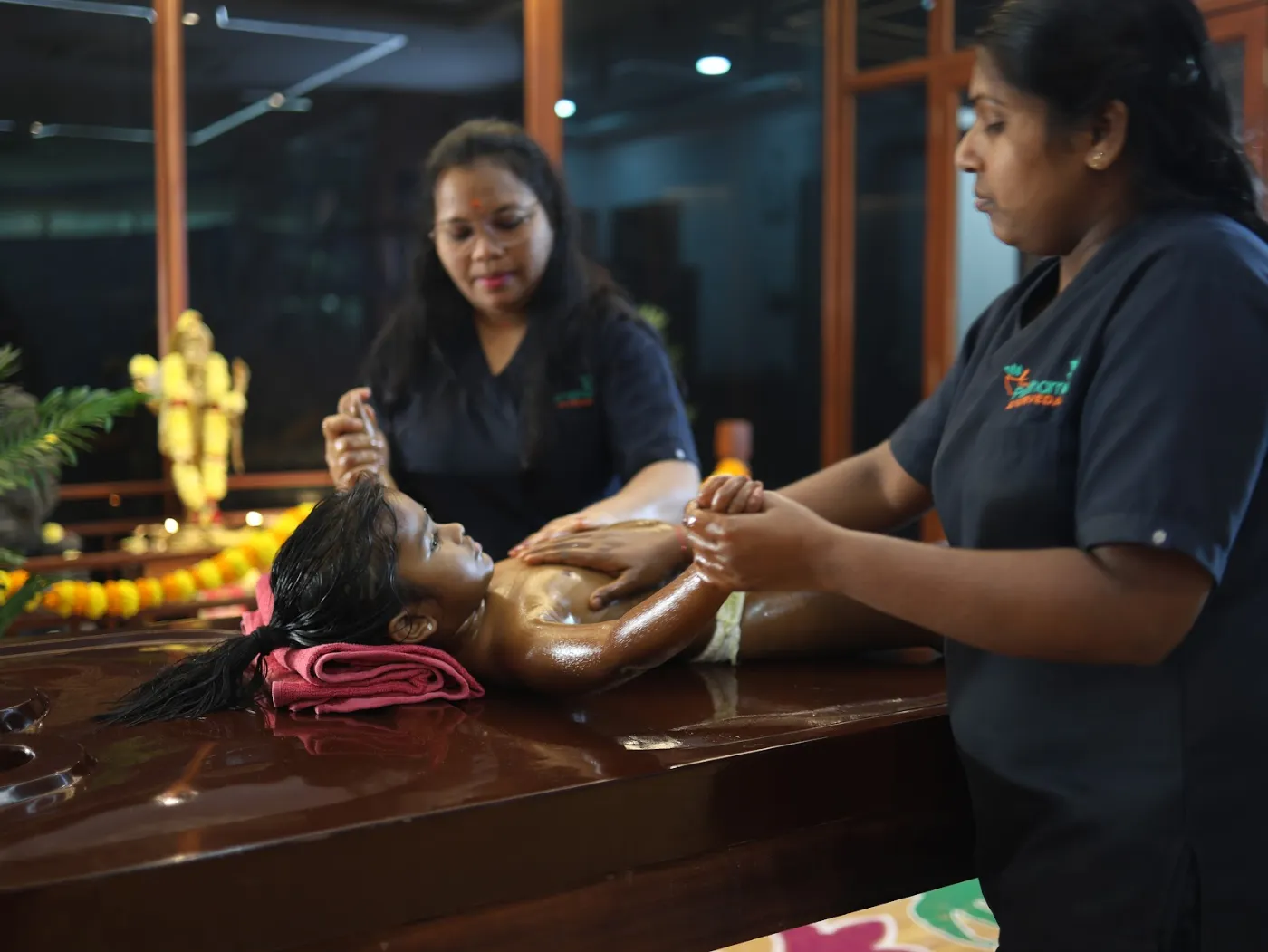
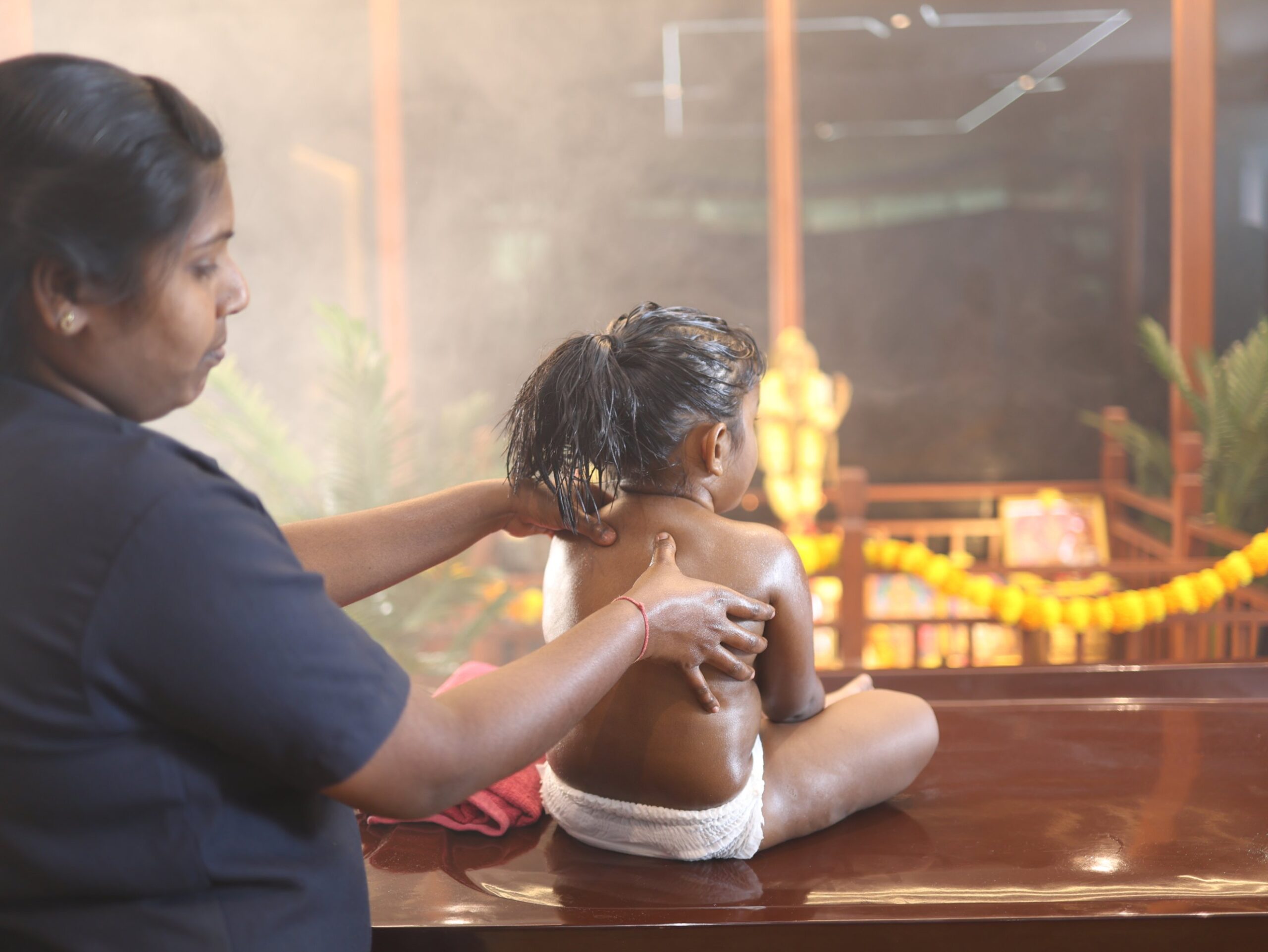
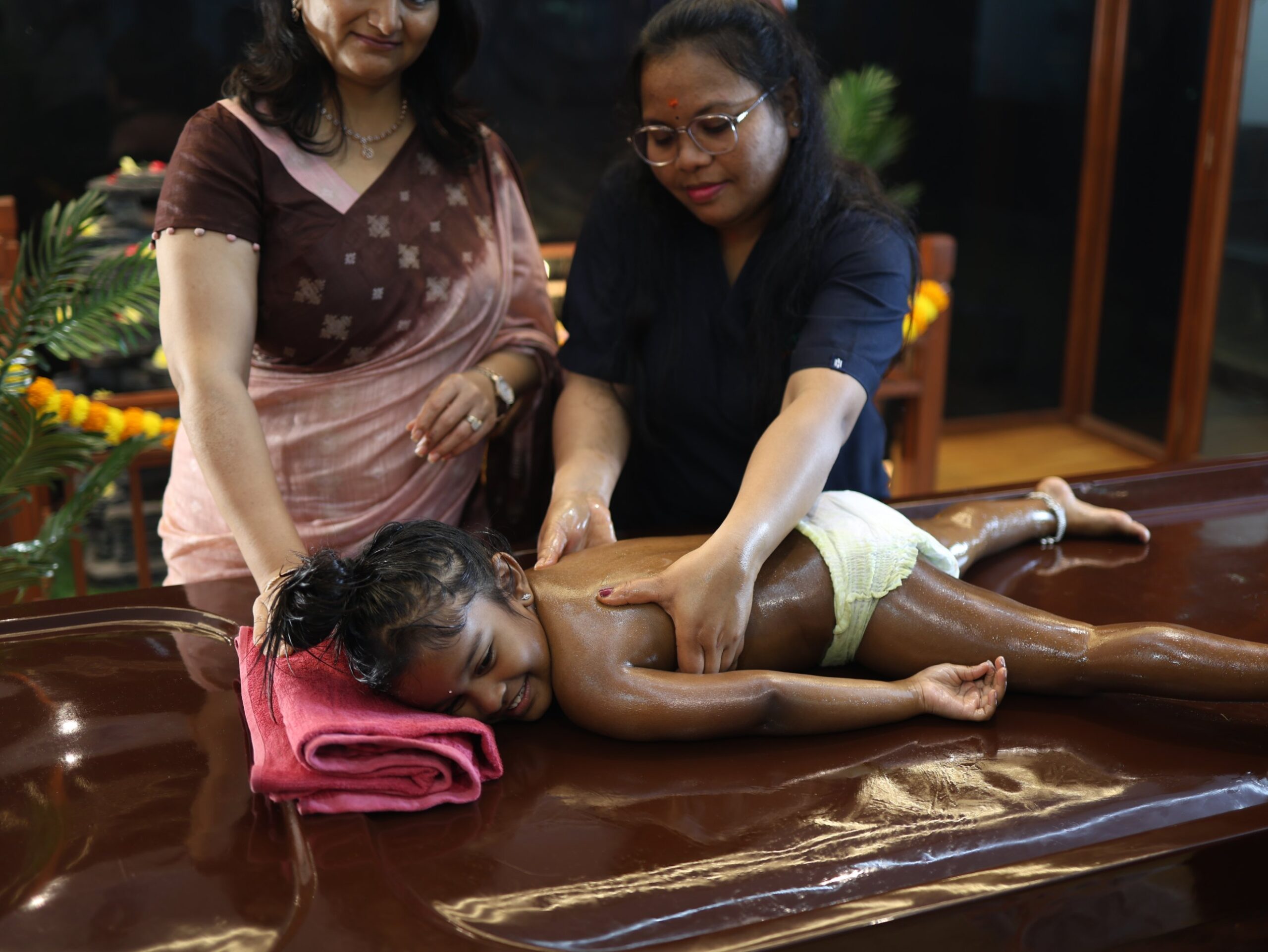
- Abhyanga with MarmaMedicated oil massage with gentle Marma therapy, used in Ayurveda to support Vyana Vata and the body’s coordination.
- Shiro Abhyanga and ThalamWarm oil or herbal paste on the head, to nourish and calm.
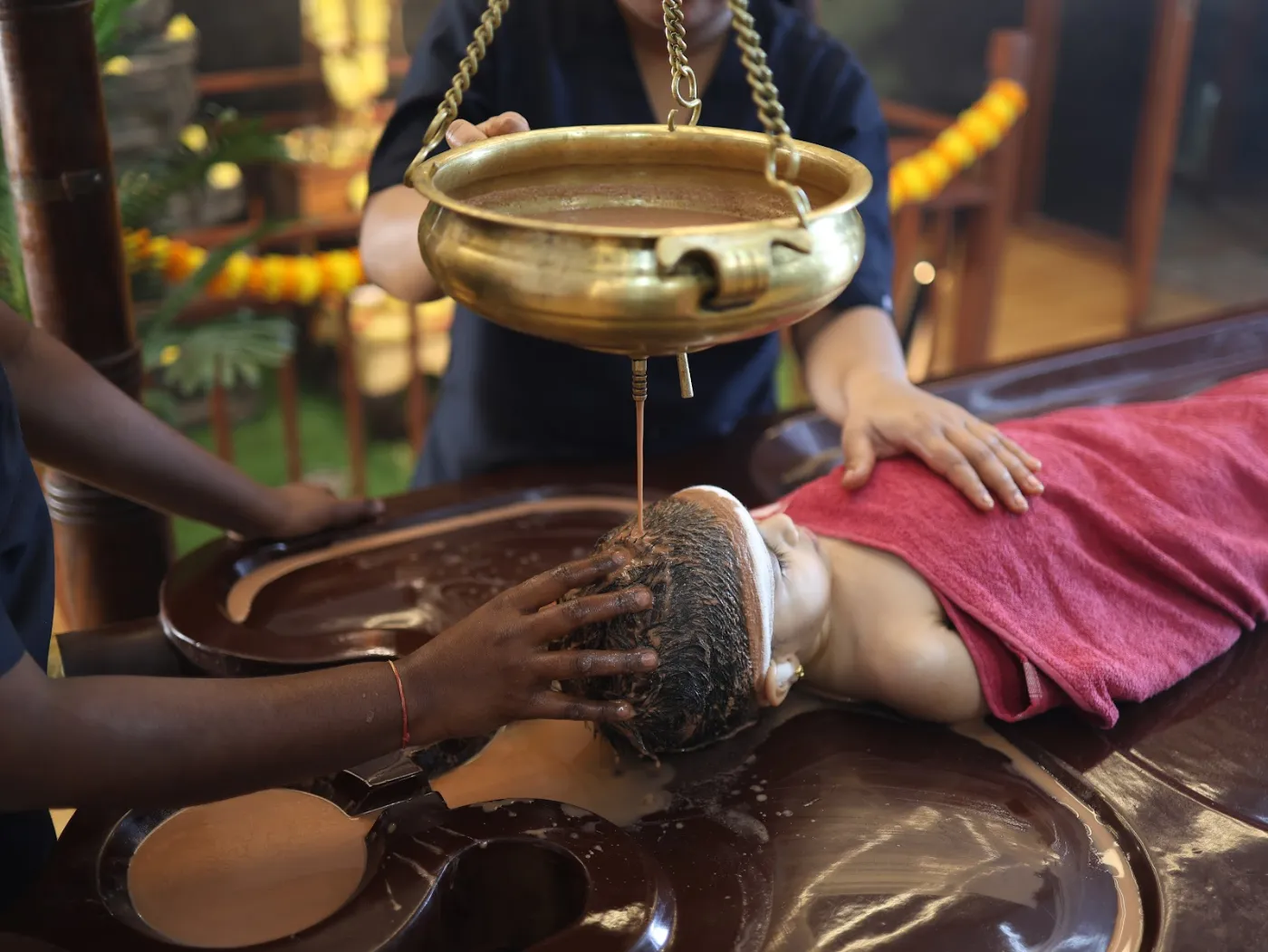
- Shirodhara or TakradharaA steady stream on the forehead, to settle Vata and ease the frustration many children feel.
- NasyaMedicated drops through the nose, which Ayurveda sees as the gateway to the head, to support Udana Vata.
- VastiMedicated enemas, the main Ayurvedic therapy for balancing Vata at its root and nourishing Majja Dhatu.
- Customised medicinesMedicines made in our own AYUSH-licensed unit with Medhya Rasayana herbs, such as Vaakkdevi Rasayana, chosen for your child’s pattern.
This page is for general information and is not a diagnosis. All therapies and medicines are given only as advised by Dr. Santhisree Bheesetti after Nadi Pariksha. Not every child needs every therapy.
Assessment and follow-up
How we understand your child, and track progress
What we look at
- Babbling and early sounds in the first year
- Which sounds and words your child can say, and how consistently
- Whether the same word changes from one try to the next
- How speech holds up as words get longer
- How well your child understands what is said
- Feeding, chewing and other planned movements
- Gross and fine motor milestones
- Hearing history and any earlier hearing tests
- Nadi Pariksha, along with digestion, sleep and behaviour
If needed, we may suggest a hearing test or an assessment by a developmental paediatrician or a speech-language pathologist.
What we watch for together
- New sounds and words
- Saying the same word the same way more often
- Longer words and short phrases holding together
- Less visible effort and searching with the mouth
- Being understood by more people
- Less frustration, and more willingness to try
Each child moves at their own pace. We note every small step, and adjust the plan as your child grows.
Start today at home
Six ways to help at home
Children with apraxia learn speech movements through calm, frequent practice. Small daily moments add up.
Let them see your mouth
Sit face to face and speak slowly, so your child can watch how the word is made.
Practise a few words, many times
Choose a few useful words and use them often through the day, in play and routines.
“Up!” on the stairs, “Up!” on the swing, “Up!” with a ball.
Sing it slowly
Slow songs and rhymes with clear rhythm make sound sequences easier to follow.
Allow other ways to talk
Gestures, signs and picture cards reduce frustration while speech is still coming.
Praise the try
Celebrate effort, not perfect words. Avoid “Say it properly”.
Keep sessions short and calm
A tired or upset child finds planning movements harder. Stop while it is still fun.
From research
What research tells us about apraxia of speech
These findings are about childhood apraxia of speech in general. They are not studies of Ayurvedic treatment.
children aged 4 to 8 years are estimated to have childhood apraxia of speech, which makes it less common than other speech difficulties.
A review of 42 studies found that most children improved with treatment, and that approaches built on frequent practice of speech movements had the strongest support.
Specialists recommend supporting children early, even when apraxia is only suspected and not yet confirmed.
- American Speech-Language-Hearing Association. Childhood Apraxia of Speech, Practice Portal. asha.org
- Murray E, McCabe P, Ballard KJ. A systematic review of treatment outcomes for children with childhood apraxia of speech. Am J Speech Lang Pathol. 2014. doi:10.1044/2014_AJSLP-13-0035
Questions parents ask
Apraxia: your questions
Will my child grow out of it like a late talker?
Apraxia is not simply a delay that catches up on its own. With early and steady support, many children make real progress, but waiting and watching is not advised.
Can apraxia be found at age 2?
It is hard to confirm before age 3. Younger children may be described as having “suspected” apraxia, and it is still worth supporting them early.
Will gestures or picture cards stop my child from talking?
No. They give your child a way to communicate while speech is developing, and usually reduce frustration.
Is my child’s mouth weak?
Usually not. In apraxia, the muscles can move, but planning the movements in the right order and timing is the difficulty. If there is also weakness, we will look at that too.
Can we consult from another city or country?
Yes. We offer online consultations across India and for families abroad. Medicines are currently delivered within India only.
Speech & language family
Other speech and language difficulties
These difficulties can occur independently or coexist. A comprehensive assessment helps identify the child’s individual communication profile.
#DontWaitStartEarly
Help your child’s words find their way out
Meet Dr. Santhisree Bheesetti at our clinics in Hyderabad, Visakhapatnam, Bengaluru or Delhi, or online from anywhere.