
Speech delay · Language delay · Late talking
"When will my child talk?"
Ayurvedic Treatment for Speech Delay in Children
When your child is not talking yet, every day of waiting feels long. Dr. Santhisree Bheesetti, Ayurvedic Child Neurocare Expert with 15+ years of experience, looks at why your child's words have not come yet, step by step, and plans care around your child alone.
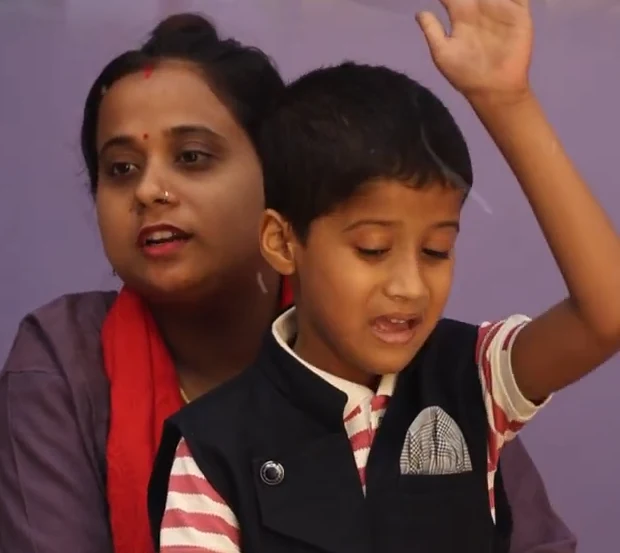
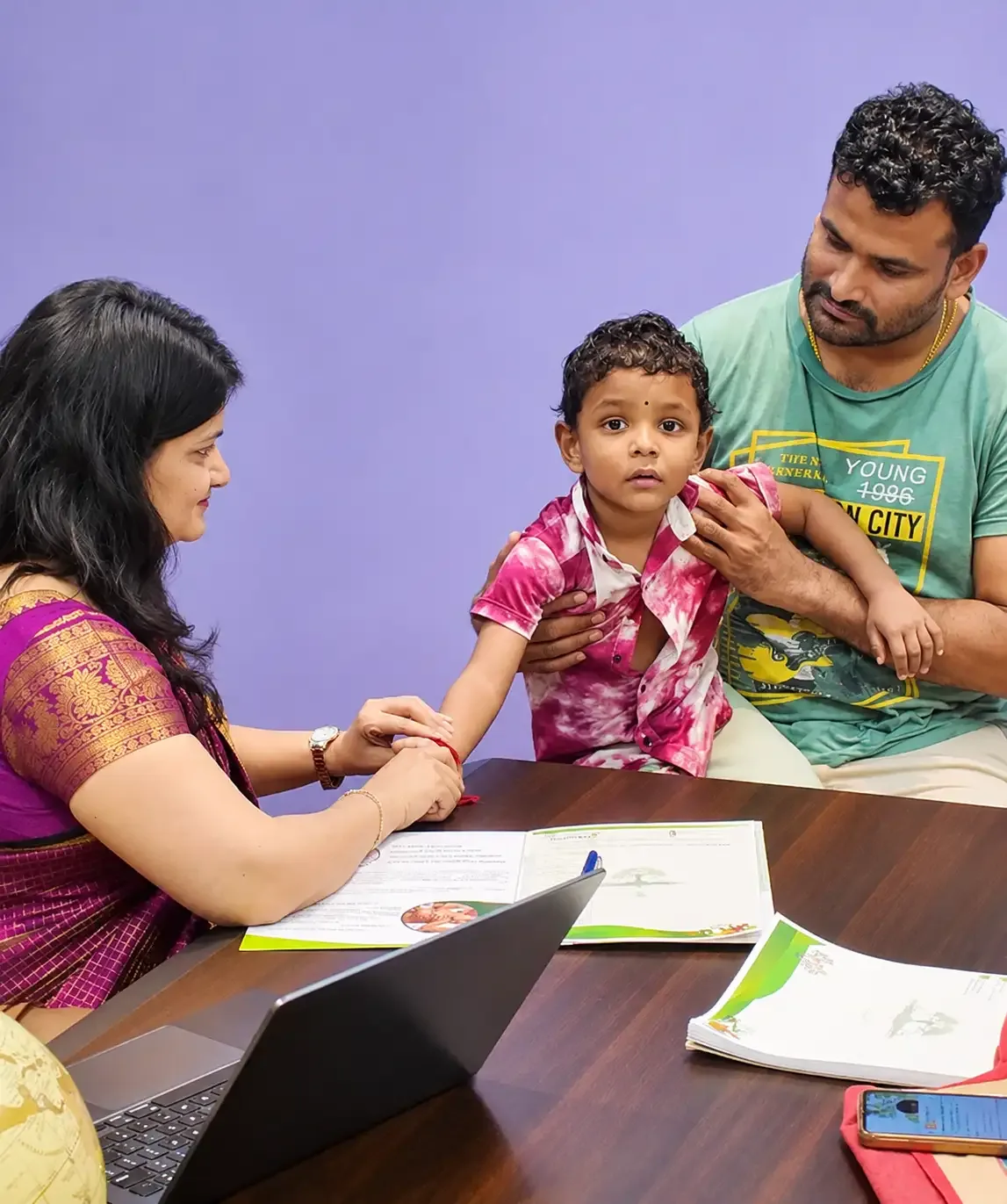
When to talk to a doctor
Is my child's speech delayed?
Every child grows at their own pace. Still, these are common signs that it is worth getting your child checked, rather than waiting.
If you notice any of these, an early consultation helps. It does not mean something is wrong; it means you are looking out for your child.
The 11 Functional Brain Systems Framework
The journey of a single word
Before your child says a first word, that word travels a long way. It has to be heard, understood, wanted and finally shaped by the lips and tongue. Dr. Santhisree's framework follows this journey across the brain's working systems, so we can see exactly where your child's words are waiting.
Hear and notice
Understand and remember
Want to say it
Say it
Before we begin
Three checks that guide the right care
Before any plan is made, it helps to know clearly what is holding your child's words back.
A hearing check
A child who cannot hear clearly cannot copy words. Even a mild hearing problem, or fluid behind the eardrum after frequent colds, can slow speech. A simple, painless hearing test is often the first step.
A speech and language assessment
A speech-language pathologist checks how much your child understands, how they use words and how they make sounds. This shows which type of speech or language difficulty your child has.
A whole-child Ayurvedic assessment
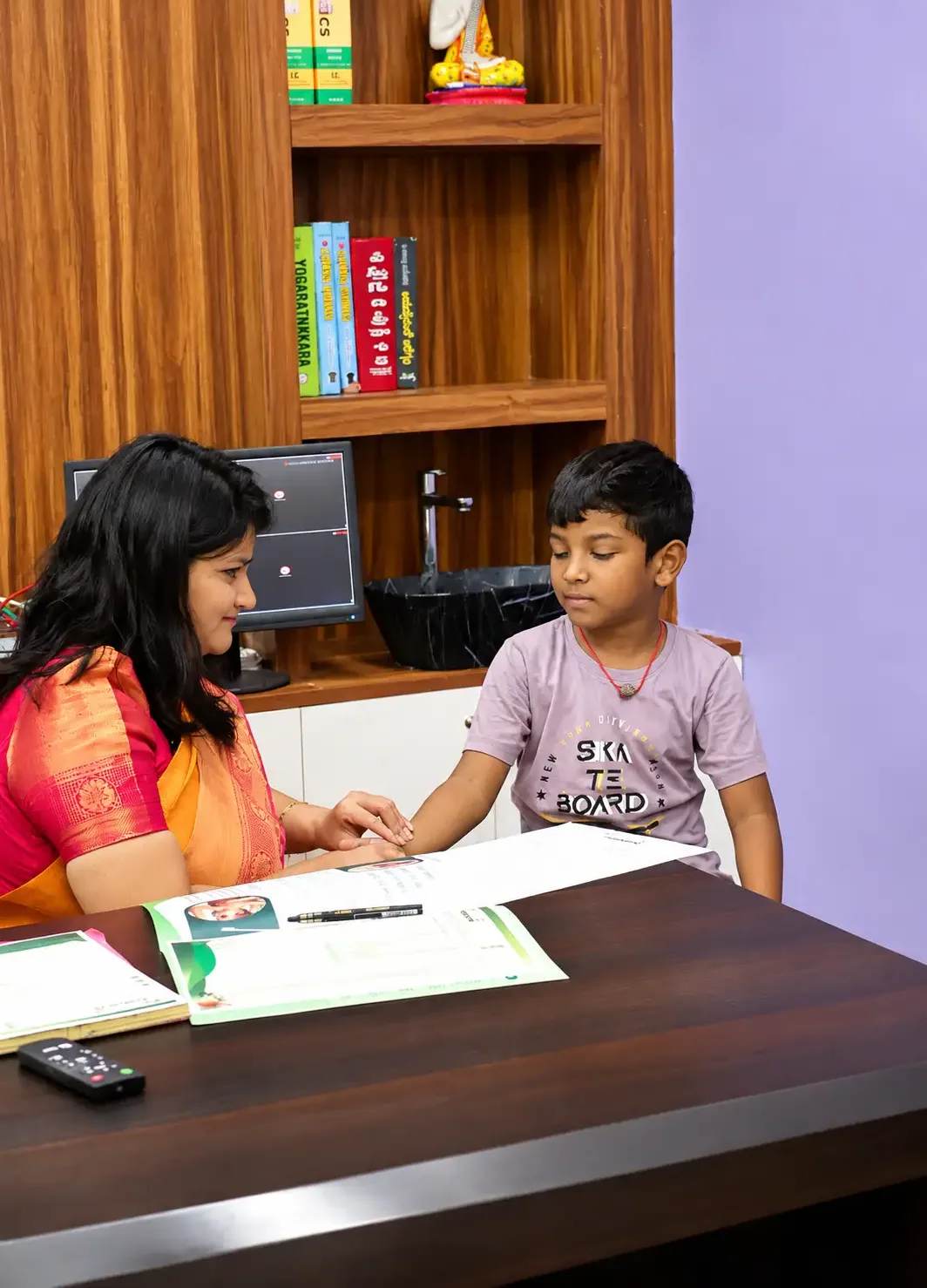
Dr. Santhisree Bheesetti then looks at your child through Nadi Pariksha, a detailed history from birth, and the brain's working systems behind speech, such as attention, sleep and digestion.
Repeated colds and ear infections can leave fluid behind the eardrum, so sounds reach your child muffled, as if under water.
Ayurveda explains this link in its own way. Frequent colds, coughs and a blocked nose show that Kapha is building up in the head and throat, the region above the collarbones that Ayurveda calls Urdhvajatru. Two forms of Kapha here matter for speech:
- Tarpaka Kapha sits in the head and nourishes the brain and every sense organ, including the ears. When it becomes heavy and blocked, the senses feel dull, much like the heavy head of a bad cold.
- Bodhaka Kapha sits in the tongue and throat and keeps the mouth moist for speaking and swallowing. When it is in excess, a child may drool or have too much saliva in the mouth.
Speech itself is started by Udana Vata, which rises from the chest to the throat and gives the voice its push. When heavy Kapha sits in its path, this upward movement is held back, and words can come slowly.
That is why, for many children with frequent colds, clearing this Kapha, improving digestion and building immunity is an important part of the speech plan, with therapies and medicines advised by Dr. Santhisree after Nadi Pariksha.
If your child has already had a hearing test or a speech assessment, please bring the reports to your consultation. We will guide you if any test is needed.
Speech & language family
Different kinds of speech and language difficulty
Read about each one to understand what parents often notice. The short descriptions here are not a diagnosis. These difficulties can occur independently or coexist. A comprehensive assessment helps identify the child’s individual communication profile.
Types of speech and language difficulties
Not every speech delay is the same
"Not talking yet" can mean very different things. Knowing which type your child has helps everyone, from you to the therapist, work on the right thing.
Understanding and using words
Language is about meaning: understanding what is said, and using words to share thoughts.
Receptive language delay
You may notice: Finds it hard to follow simple instructions, point to pictures when you name them, or understand questions.
How it is different: The main difficulty is in understanding words, not only in saying them.
In Ayurveda: linked to Prana Vata and Tarpaka Kapha, which run and nourish the senses, and to Sadhaka Pitta, which gives understanding.
Expressive language delay
You may notice: Understands most of what you say, but uses few words or short sentences, or pulls your hand instead of asking.
How it is different: Understanding is fine; turning thoughts into words is hard. Many "late talkers" fit here.
In Ayurveda: starting speech and putting effort into it are the work of Udana Vata.
Mixed receptive–expressive delay
You may notice: Both understanding and speaking are behind what is expected for age.
How it is different: Your child needs support on both sides, understanding and expressing.
Social use of language (pragmatic difficulties)
You may notice: Has words, but finds it hard to take turns, stay on a topic, ask for help or understand tone and jokes.
How it is different: The words are there; using them with people is the challenge. This is often seen with Autism.
Language regression
You may notice: Your child had words or skills and then stopped using them or lost them.
How it is different: This always needs prompt attention. Please see your doctor early, without waiting.
Making the sounds
Speech is about the mouth: planning and making sounds clearly and smoothly.
Speech sound difficulties (unclear speech)
You may notice: Says "tat" for "cat", drops sounds, or speech that others find hard to follow.
How it is different: Your child knows the word; making the right sounds is the hard part.
Childhood apraxia of speech
You may notice: Knows what to say but struggles to get the mouth to say it. Mistakes change each time, longer words are harder, and a word said once may not come again.
How it is different: It is a planning difficulty in the brain, not weak muscles. It should be diagnosed by an experienced speech-language pathologist.
Oral motor difficulties
You may notice: Mouth often open, drooling, trouble chewing, blowing or licking the lips.
How it is different: The lips, tongue and jaw are weak or poorly coordinated, which can affect both eating and speaking.
In Ayurveda: drooling and too much saliva point to excess Bodhaka Kapha, the Kapha of the tongue and throat.
Stuttering
You may notice: Repeats sounds ("b-b-ball"), stretches sounds or gets stuck before a word.
How it is different: Your child has the words; the flow is interrupted.
In Ayurveda: called Gadgada. It is linked to a disturbed Udana Vata, the Vata that drives speech, often held back by Kapha in the channels that carry speech.
What parents often describe
These are common ways speech delay shows up at home. One child can have more than one.
Late talking
You may notice: Understands a lot but uses fewer words than other children the same age.
How it is different: Usually an expressive delay. Some children catch up, but a check-up tells you whether your child needs support.
Non-verbal or minimally verbal
You may notice: Has not started speaking yet, or uses only a few sounds or words.
How it is different: The child may still communicate in other ways, like pointing, leading you or using pictures.
Echolalia (repeating words)
You may notice: Repeats words, lines or songs, right away or much later, instead of using their own words.
How it is different: It is often a step on the way to language, especially in Autism.
Speech delay with other conditions
Speech delay often comes along with another developmental concern.
With Autism
You may notice: Few words, along with less eye contact, attention and connection.
How it is different: Speech is one part of a bigger picture.
With Global Developmental Delay
You may notice: Late with sitting, walking or play, and also with talking.
How it is different: Speech needs support alongside the other milestones.
With ADHD
You may notice: Restlessness and poor focus that also hold back words and listening.
How it is different: Attention is the first door to language.
Pointing, simple signs, picture cards and speech devices (called AAC) give your child a way to communicate today. Research shows these tools do not stop a child from talking, and for many children they help speech grow. We encourage them alongside our care.
The Ayurvedic view
From the mind to the voice
In Ayurveda, every word is teamwork between the Doshas in the head, the chest and the throat. Each one has its own job:
Words slow down when this teamwork is disturbed. A restless Prana Vata scatters attention. Heavy Kapha, often from frequent colds and coughs, can cover the channels that carry speech and hold back the Vata that moves the voice. Weak digestion (Agni) leaves Ama, a sticky residue that blocks the channels (Srotas) and the free flow of Vata.
Ayurveda also names three abilities of the mind that every word needs: Dhi, understanding what is heard; Dhriti, holding the mind steady on it; and Smriti, remembering the word when it is needed.
That is why two "late talkers" can need very different care. One may need the channels cleared, another the mind calmed, and another better digestion and sleep first. Dr. Santhisree finds out which is true for your child through Nadi Pariksha and a detailed history.
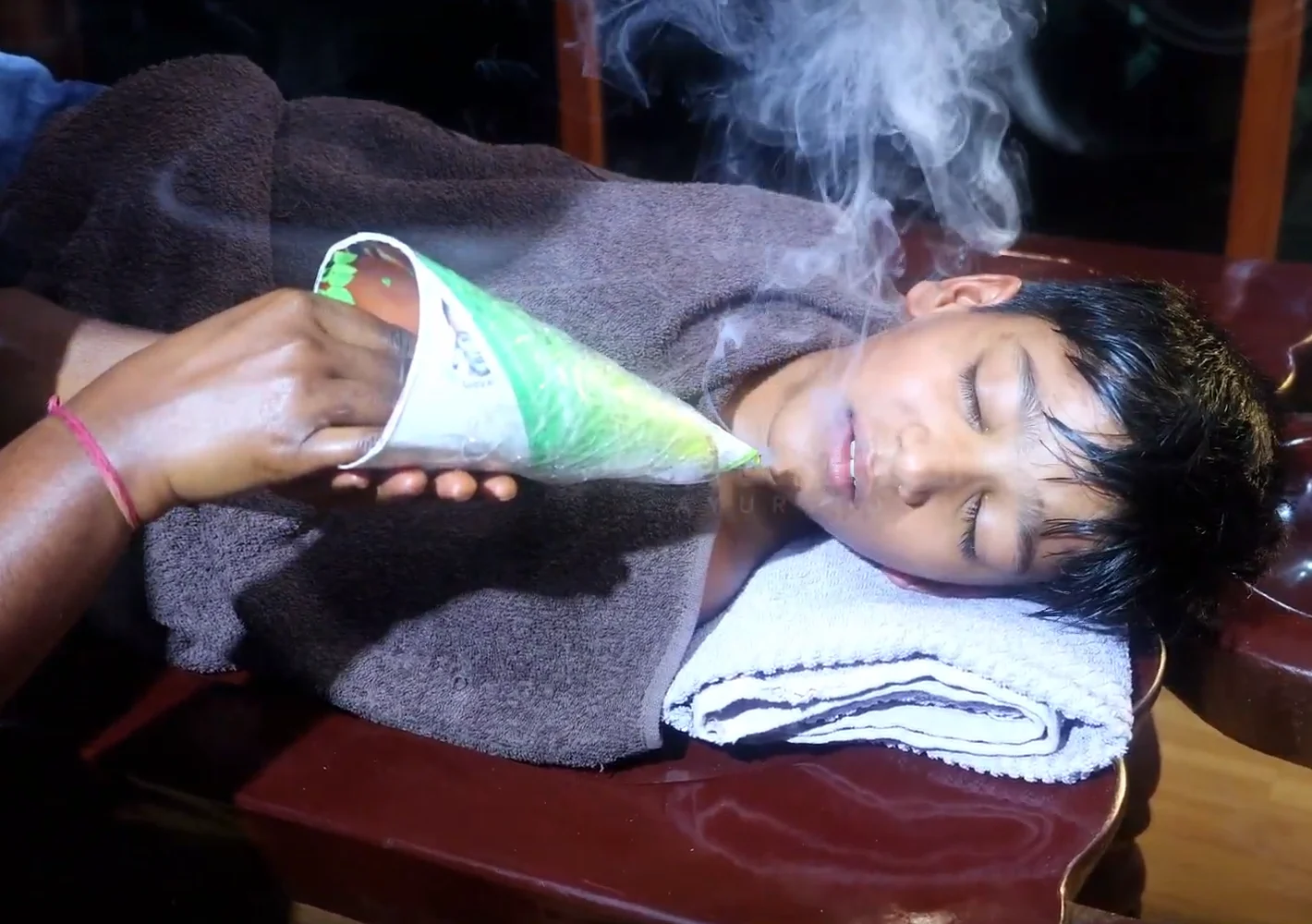
Nasya care · In Ayurveda, the nose is called the gateway to the head (Nasa hi shiraso dvaram). Nasya is not only nasal drops. It can also be given in other gentle forms, such as medicated herbal smoke, so that care reaches the head region directly. Nasya is a classical therapy for both Prana Vata and Udana Vata, the two Vatas most closely tied to speech. Whether your child needs it, and in which form, is advised by Dr. Santhisree after Nadi Pariksha.
How we help
A speech plan made for your child
Dr. Santhisree builds your child's plan after Nadi Pariksha. It works best when it is followed just as she advises.
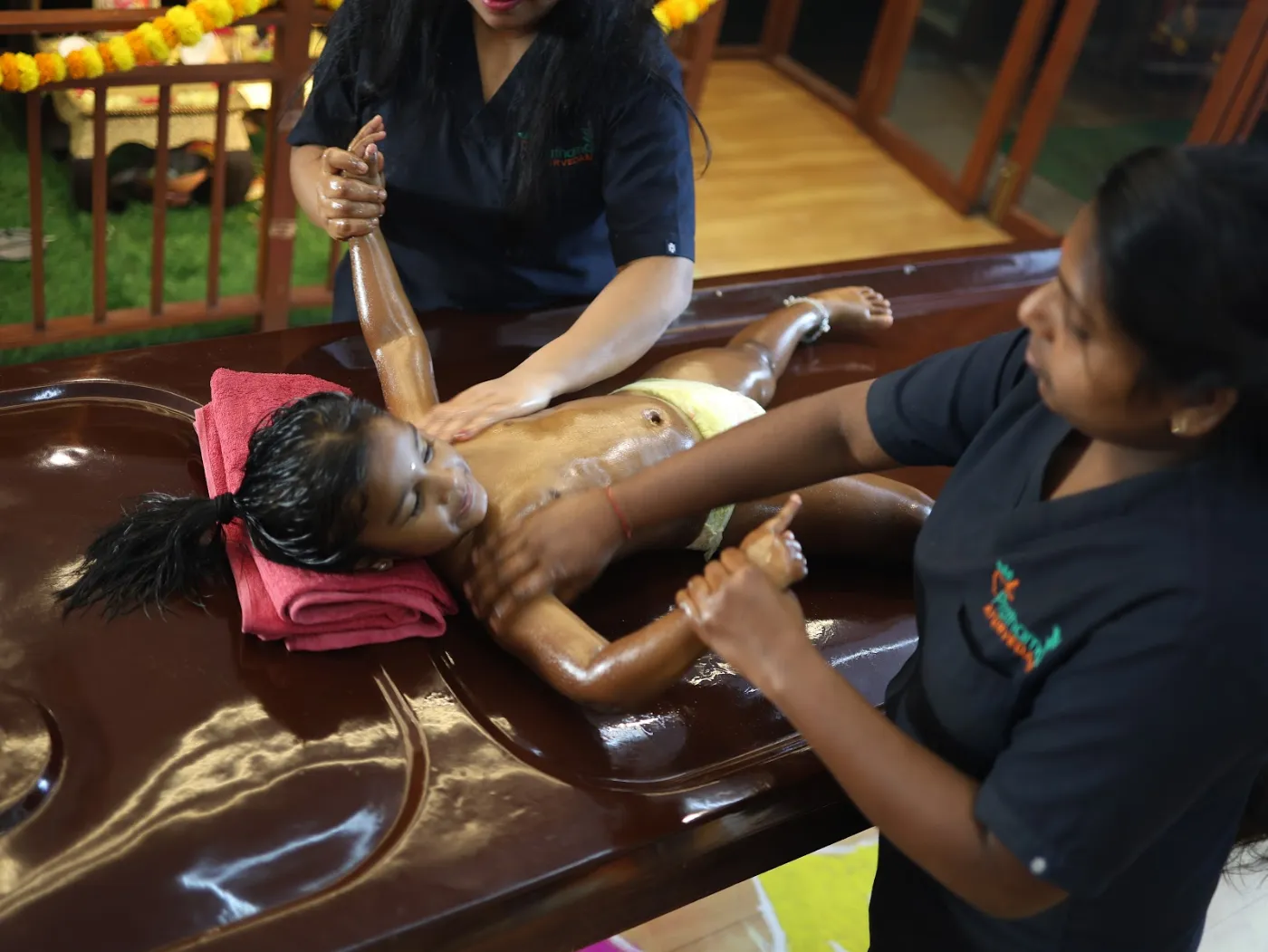
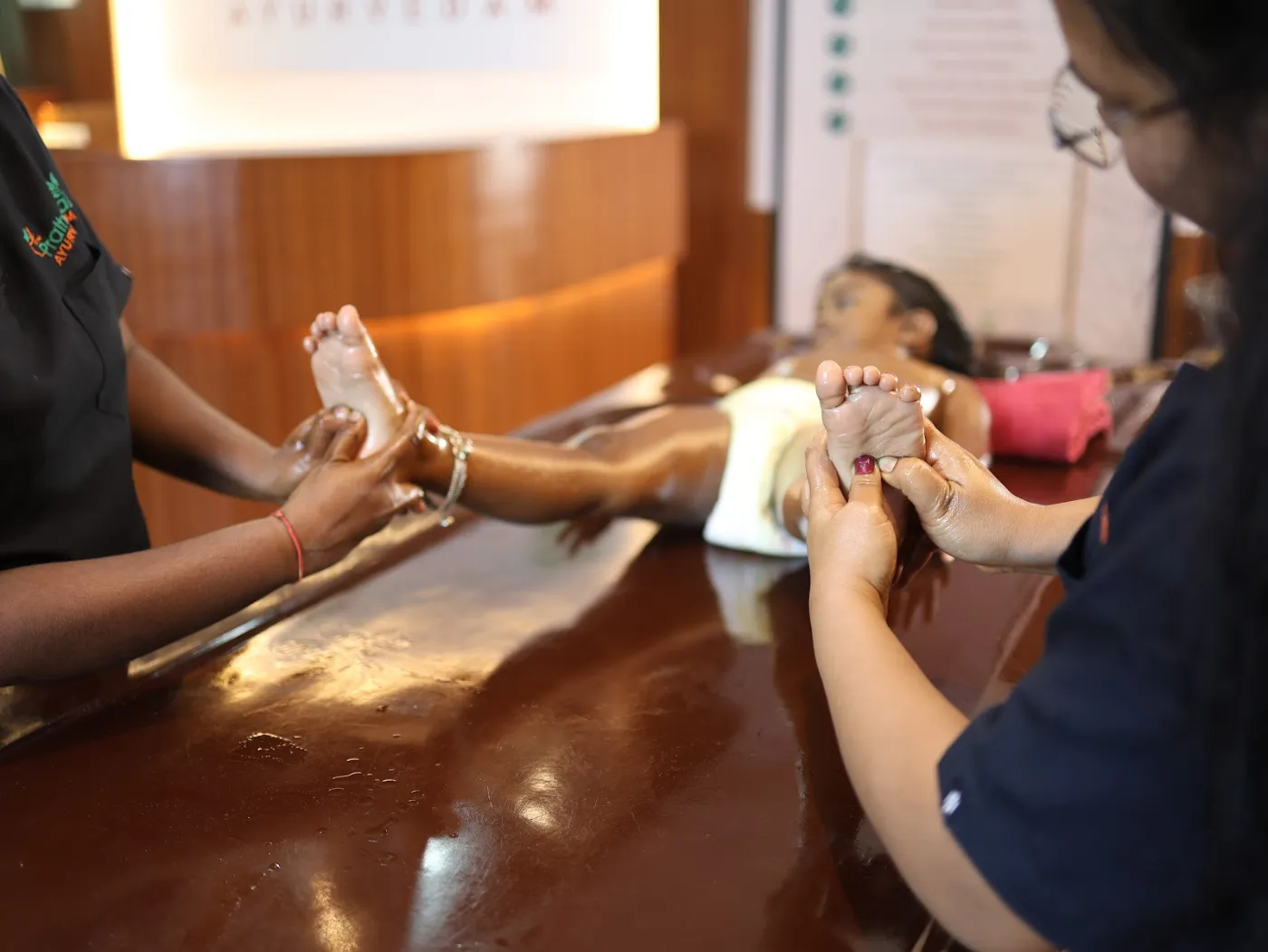
Panchakarma
Children's Panchakarma has many gentle therapies. After Nadi Pariksha, Dr. Santhisree advises the ones your child needs. Together, they calm and nourish the nervous system. Our aim is to support the brain areas involved in speech, the areas that understand words, plan how to say them and link sounds with meaning, so that step by step your child becomes more ready to speak. In our experience, many children become calmer, more attentive and more ready to learn new words.
Diet and routine
Simple food and sleep changes that support digestion (Agni), focus and calm: warm, freshly cooked meals, and fewer cold, heavy and very sweet foods that build Kapha, especially for children who catch colds often. A rested child with a settled tummy is far more ready to listen and talk.
Home guidance
Small daily steps for you: how to talk, play and wait for your child's words, so the plan continues at home between visits.
All therapies and medicines are given only as advised by Dr. Santhisree Bheesetti after Nadi Pariksha. Our care works alongside your child's speech therapy, not in place of it.

Customised medicines, starting with Vaakkdevi
Dr. Santhisree first made Vaakkdevi Rasayana for her own son. Today it is our most loved medicine for children who are late to talk: a soft herbal paste given on the tongue, made in our own AYUSH-licensed, GMP-certified unit. It is suitable from 6 months of age, including for younger brothers and sisters of children with Autism, ADHD or developmental delay.
For children who repeat words and lines, Vaakkshuddikaran Kwath Churna may be added. The right medicines and dose for your child are advised by Dr. Santhisree.
Progress, step by step
Before the first words, other changes come
Parents are often surprised that words are not the first thing they notice. Many children first begin to understand more, look at faces, copy actions and answer to their name. Sounds and words usually follow. Each child moves at their own pace, and Dr. Santhisree reviews progress with you at every follow-up.
Questions parents ask
Speech delay: your questions
My child is 2 and not talking. Should I wait?
Many children do catch up, but waiting without a check-up can lose precious time. A consultation helps you understand what is holding your child back, and what you can start doing now.
What is the difference between speech delay and language delay?
Speech is about making sounds clearly with the mouth. Language is about understanding words and using them to share thoughts. A child can have one or both, and the care plan is different for each.
Will Ayurveda replace speech therapy?
No. Speech therapy teaches your child how to use words. Our care supports the body and mind behind speech. The two work well together, and we encourage you to continue therapy.
Is Vaakkdevi Rasayana safe for small children?
It is made from herbs in our own AYUSH-licensed, GMP-certified unit and is suitable from 6 months of age. The right dose for your child is given by our doctor.
Do you help children who stutter?
Yes. In Ayurveda, stuttering (Gadgada) is linked to a disturbed Udana Vata, the Vata that drives speech, often held back by Kapha. The plan focuses on calming the mind and steadying the breath and the voice.
Why does a speech plan look at sleep and digestion?
Because a word needs much more than the mouth. A child who sleeps poorly or has an upset tummy has less energy left for listening, copying and talking. When sleep and digestion settle, many children are more ready to learn new words.
Can we consult online?
Yes. We offer online consultations across India and for families abroad. Medicines are currently delivered within India only.
Related: Ayurvedic care for Autism · Sensory issues · ADHD · Panchakarma for children
#DontWaitStartEarly
Every word is worth starting early for
Meet Dr. Santhisree Bheesetti at our clinics in Hyderabad, Visakhapatnam, Bengaluru or Delhi, or online from anywhere.