
ADHD in children
Always on the move. A mind racing ahead. Homework that never ends.
Ayurvedic Treatment for ADHD in Children
Some children are full of energy, ideas and feelings, but find it hard to slow down, wait their turn or finish what they start. Dr. Santhisree Bheesetti, Ayurvedic Child Neurocare Expert with 15+ years of experience, helps these children find a steadier, calmer rhythm through Panchakarma, customised medicines and simple changes at home.
A day with a busy mind
Does your day look like this?
Getting ready
Three reminders to brush his teeth, and one shoe is still missing.
In class
Another note from the teacher: “Bright, but cannot sit in one place.”
Lunch
Two bites, then she is up and running. The lunch box comes back full.
Homework
Ten minutes of work takes an hour, with a dozen breaks in between.
Playtime
He grabs the toy before his turn, and the game ends in tears.
Bedtime
The body is tired, but the mind just won’t switch off.
Your child is not being naughty on purpose, and this is not because of anything you did wrong. A busy brain needs a different kind of support, and that support can begin today.
What is ADHD?
ADHD can look different in every child
ADHD (Attention Deficit Hyperactivity Disorder) is a difference in how the brain manages attention, activity and self-control. Doctors usually describe three presentations. Many children also have Autism, speech delay or sensory issues alongside ADHD.
The dreamer
- Drifts off in the middle of a task
- Loses pencils, bottles and books
- Seems not to listen when spoken to
- Makes careless mistakes in easy work
In Ayurveda, we often see a heavy, foggy mind here, with Kapha and Tamas (the dull quality of the mind) slowing things down, and weak digestion.
The racer
- Runs and climbs at the wrong times
- Talks non-stop and answers before the question ends
- Cannot wait for a turn
- Fidgets, taps and squirms in the chair
This is the classic picture of high Vata: light, quick and always moving, with too much Rajas, the restless quality of the mind.
A bit of both
- Distracted and restless at the same time
- Quick to anger, quick to cry
- Starts many things, finishes few
- Struggles with friends and group play
Here Vata and Pitta are often high together: Vata scatters the mind, and Pitta adds heat, impatience and irritability.
Only a qualified professional, such as a developmental paediatrician, child psychiatrist or child psychologist, can diagnose ADHD. Whatever the diagnosis says, Dr. Santhisree looks at your whole child, not just a label.
Not sure whether to worry? Book a free 10-minute call. A doctor from our team will call you back, listen to your concerns and guide your next step.
This short call is free. A full consultation with Dr. Santhisree Bheesetti is booked separately.
Ayurveda’s view
Why the mind keeps running
In Ayurveda, attention is the work of Prana Vata, the subtle “wind” in the head that guides the senses and the mind. When this wind becomes too quick and dry, attention jumps from one thing to the next, like a lamp flame in a breeze.
This is why we work on the body and not only on behaviour. Warm oil, warm food, steady routines and calming therapies bring the light, quick, dry nature of Vata back into balance, and a settled body helps the mind settle too.
The steering wind
Guides where attention goes. When it runs too fast, the mind races and the body follows.
The spark of drive
Gives understanding, drive and the will to finish. When it overheats, the child becomes impatient and quick to anger.
The cool, steady nourishment
Nourishes the brain and senses, and keeps the wind and the fire in check. It brings patience and steadiness; when it is low, a child has little of either.
Digestion and deep nourishment
A weak Agni (digestive fire) leaves behind Ama, undigested residue, and the brain is poorly fed. Ayurveda links attention to Majja Dhatu, the deep tissue that nourishes the nervous system.
Knowing, holding, remembering
Ayurveda describes three powers of the mind. Many children with ADHD know the rule perfectly well. What slips is the power to stop and wait, and to remember the rule the next time.
“I know I should wait for my turn.” This is usually fine.
Holding the mind steady and stopping an impulse. This is where most children with ADHD struggle.
Recalling the rule the next time, and remembering instructions given a minute ago.
Our care aims to strengthen all three, by calming Vata, cooling Pitta and nourishing the mind from within.
The 11 Functional Brain Systems Framework
Attention never works alone
Dr. Santhisree’s 11 Functional Brain Systems Framework brings Ayurveda and the science of child development together. In ADHD, two systems sit at the centre: attention, and executive function, the brain’s “manager” that plans, starts, stops and finishes tasks.
But a busy mind often pulls other systems along with it. That is why we never treat attention alone.
This is a common pattern, not a test. Every child’s map is different, and that is exactly what we look at, along with your child’s Ayurveda Brain Type, at the first consultation.
How we help
Calming the wind, feeding the mind
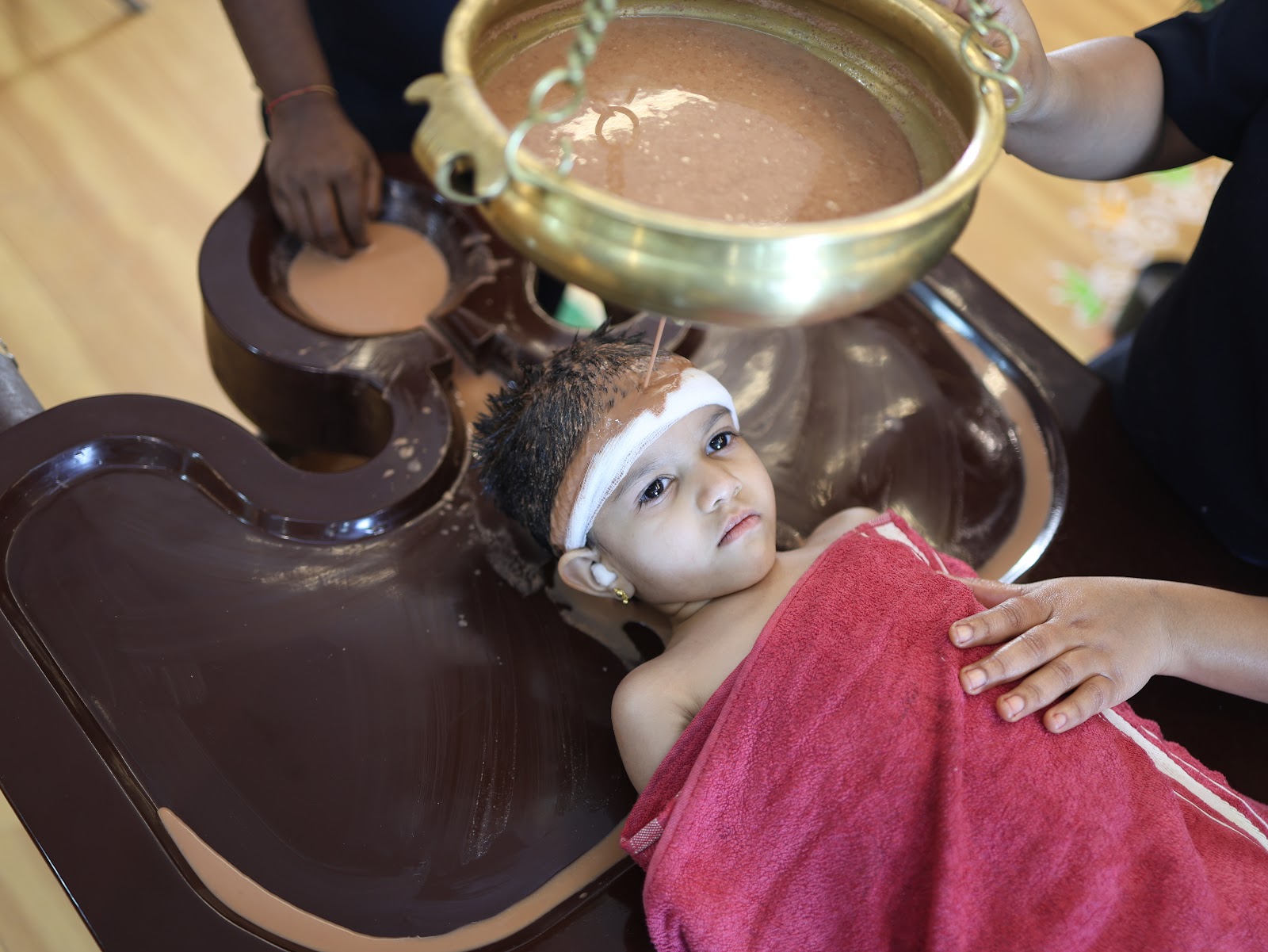
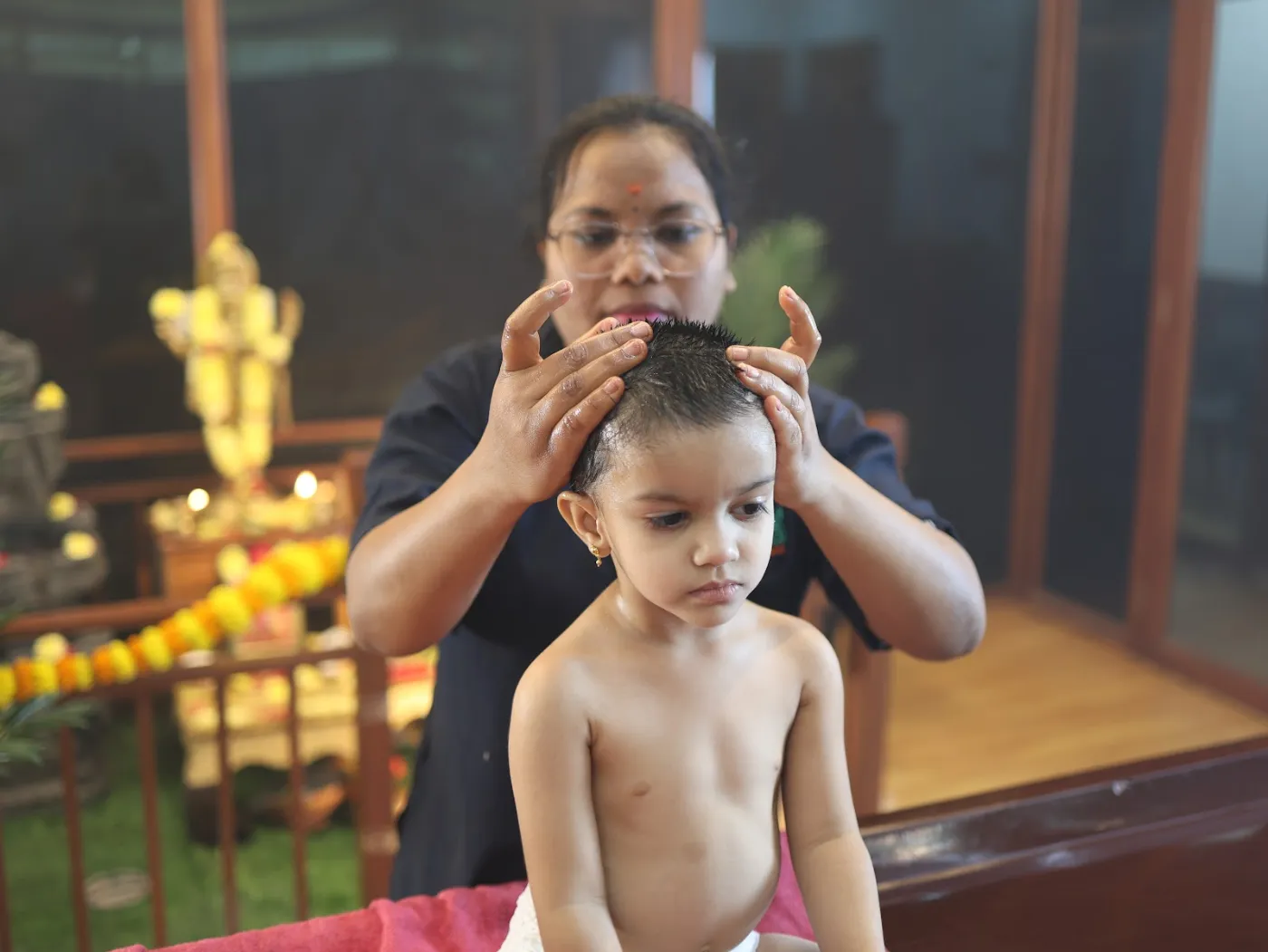
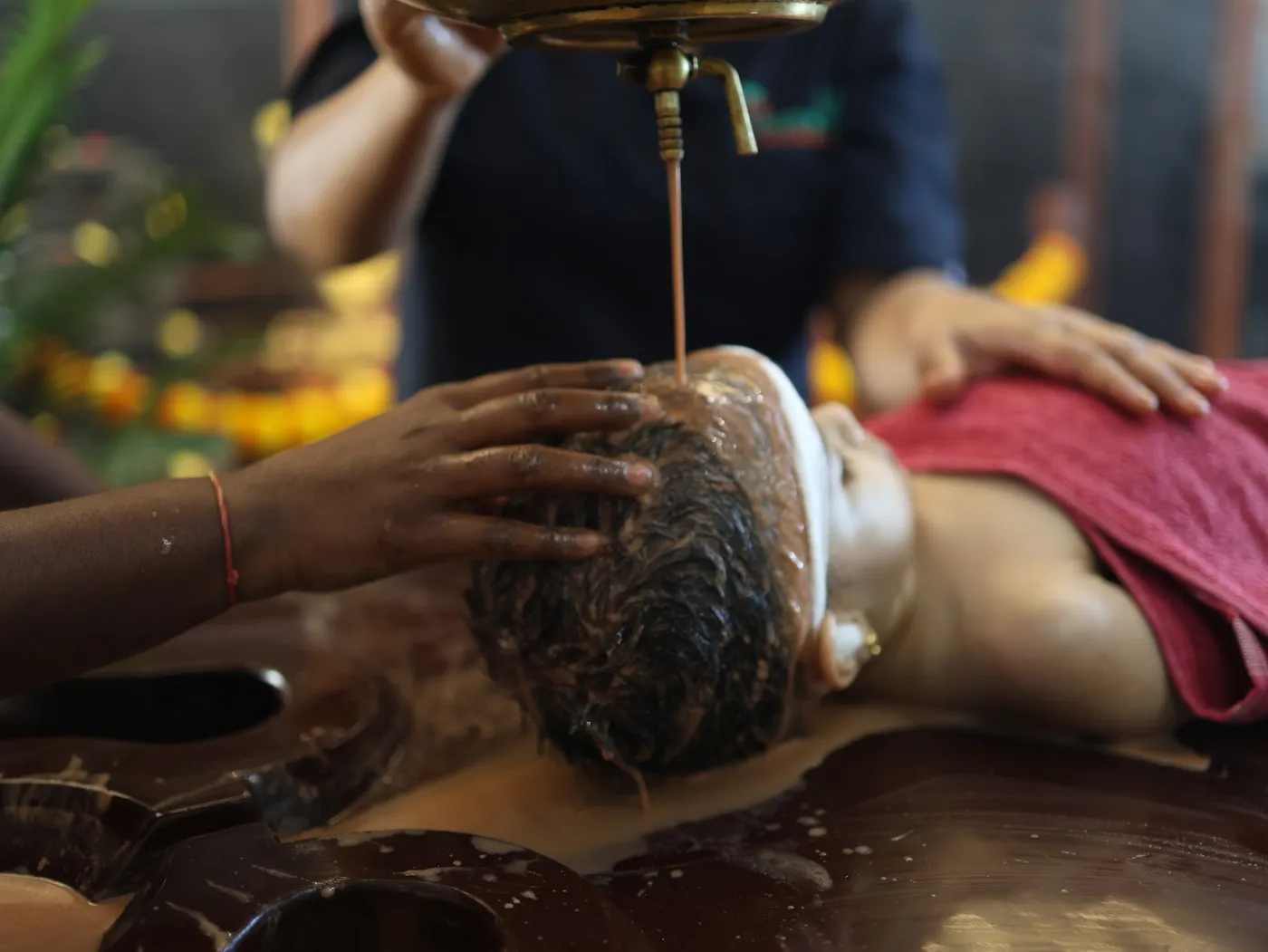
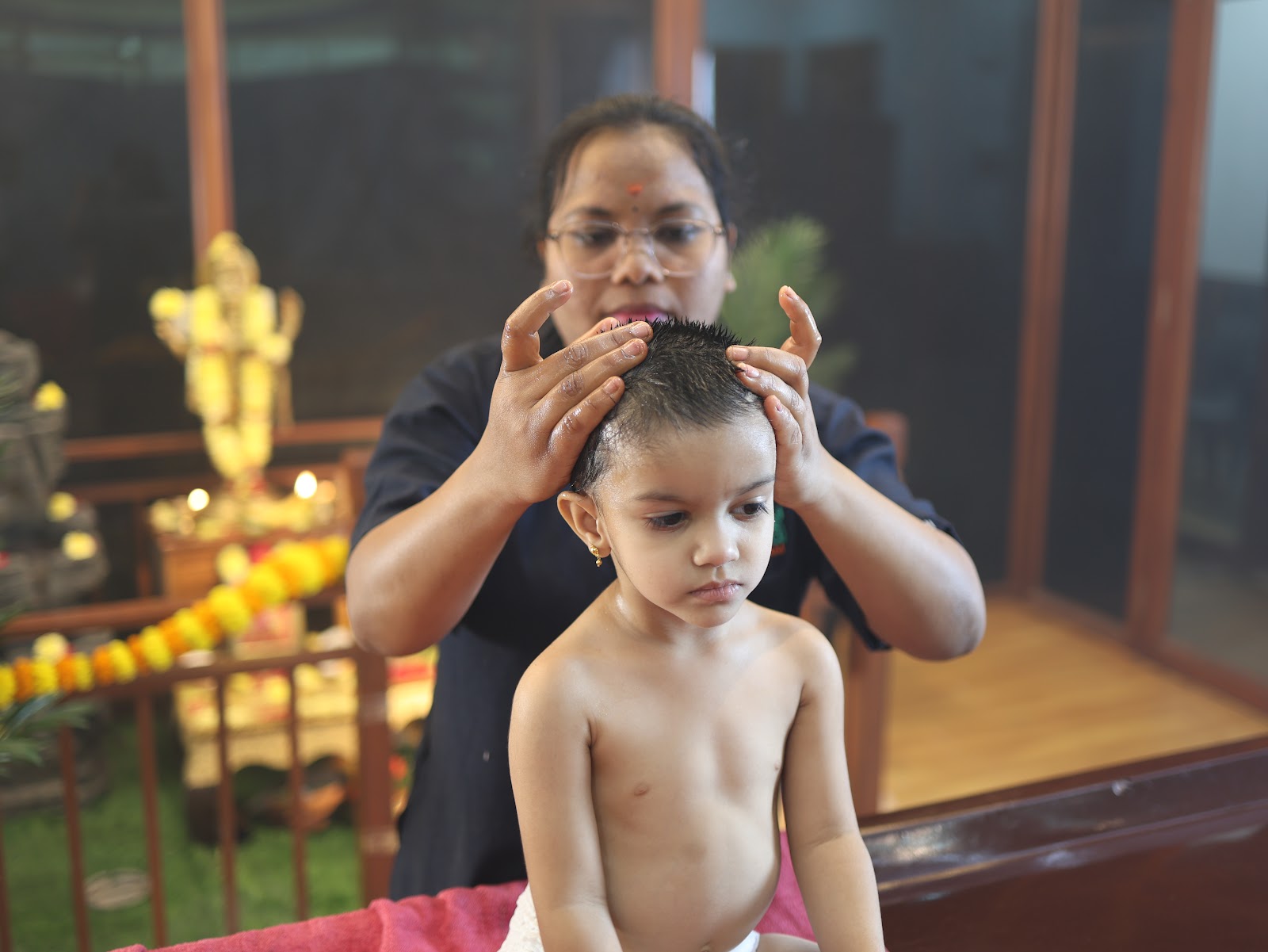
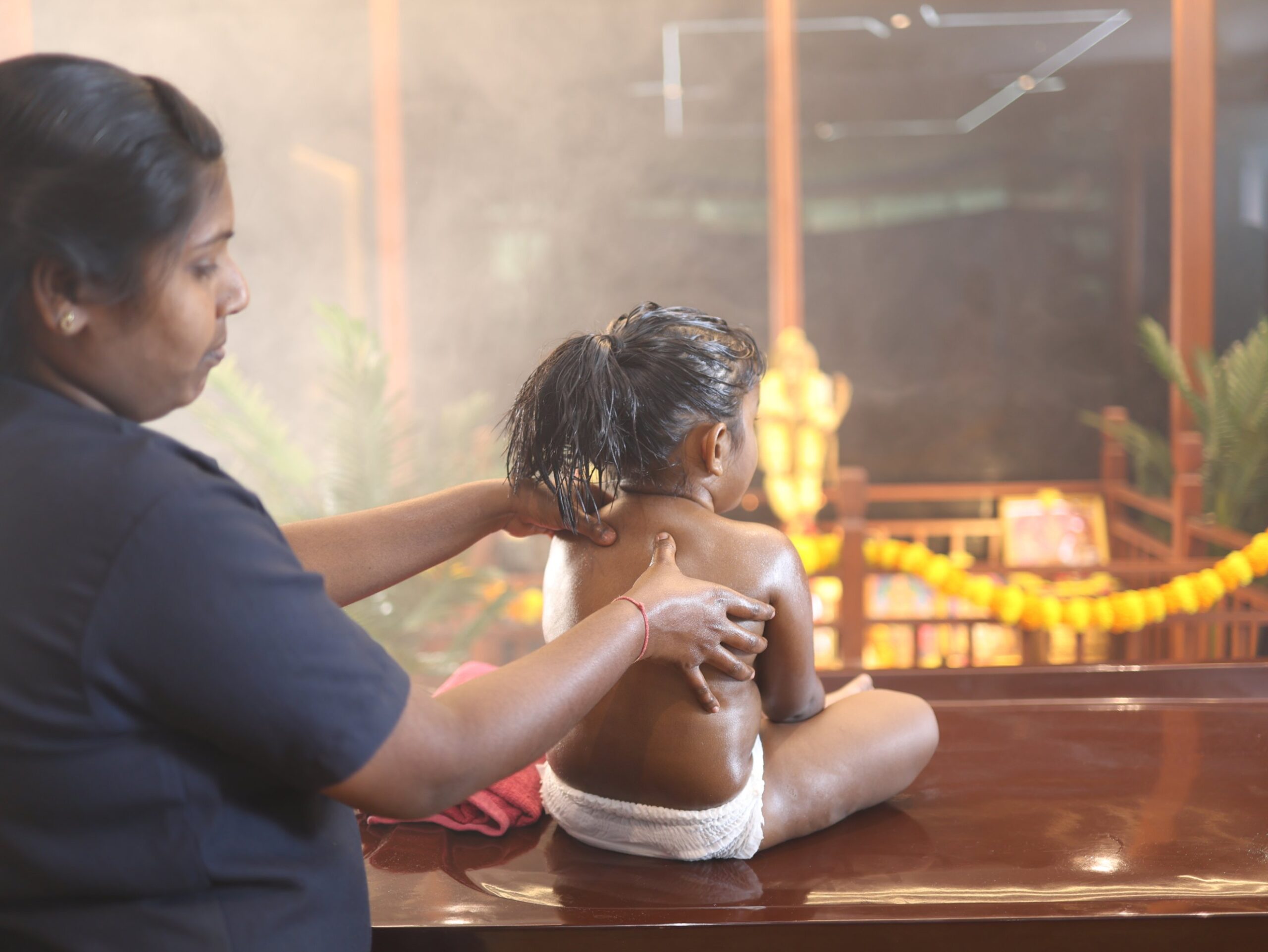
Panchakarma is at the heart of our care. These gentle therapies give a restless body warm, steady, grounding input, which in our experience helps many children feel calmer, focus better and sleep more soundly.
Vasti
Ayurveda’s main treatment for Vata. A medicated enema, chosen for your child, that calms Vata at its root and nourishes the body from within.
Nasya
Medicated drops or gentle herbal smoke through the nose, to reach Prana in the head.
Pizhichil and Pinda Sweda
Warm oil poured over the body, or warm pouches of rice and herbs, for children who need deeper calming and strength.
All therapies and medicines are given only as advised by Dr. Santhisree Bheesetti after Nadi Pariksha. Not every child needs every therapy, and following the plan just as she advises is what helps your child the most.
The SANKALPA Protocol
Four parts, one plan
Our care for ADHD rests on four parts. Leaving any one out weakens the others.
Diet and lifestyle
Warm, simple home food at fixed times, less sugar and fewer packaged snacks, and a steady daily rhythm, set for your child’s body type.
Panchakarma
Calming therapies such as Shirodhara, Takradhara, Shiro Abhyanga, Abhyanga with Marma, Vasti and Nasya, as advised for your child.
Customised medicines
Medicines made in our own AYUSH-licensed unit, with Medhya Rasayana herbs that support focus, memory and calm.
Your effort at home
The routines you keep every day, guided by our team for a full month after the consultation and at every follow-up.
Your child can continue school support, occupational therapy, behaviour therapy and any medicines prescribed by their doctor. Please do not stop or change any medicine on your own.
Start this week
Small changes, calmer days
+More of this
- The same time to wake up, eat and sleep, every day
- At least an hour of outdoor play: running, climbing, cycling
- A short warm-oil massage before bath, as our doctor guides you
- One instruction at a time, said while looking at your child
- Big tasks broken into small steps, with praise after each one
- Warm, freshly cooked home food, as advised for your child
−Less of this
- Screens, especially in the hour before bed
- Sugary drinks, biscuits, chips and packaged snacks
- Cold, fried, leftover and brightly coloured foods
- Long lectures and shouting, which rarely work for a busy brain
- Late nights and skipped meals
- Too many activities packed into one day
In our experience
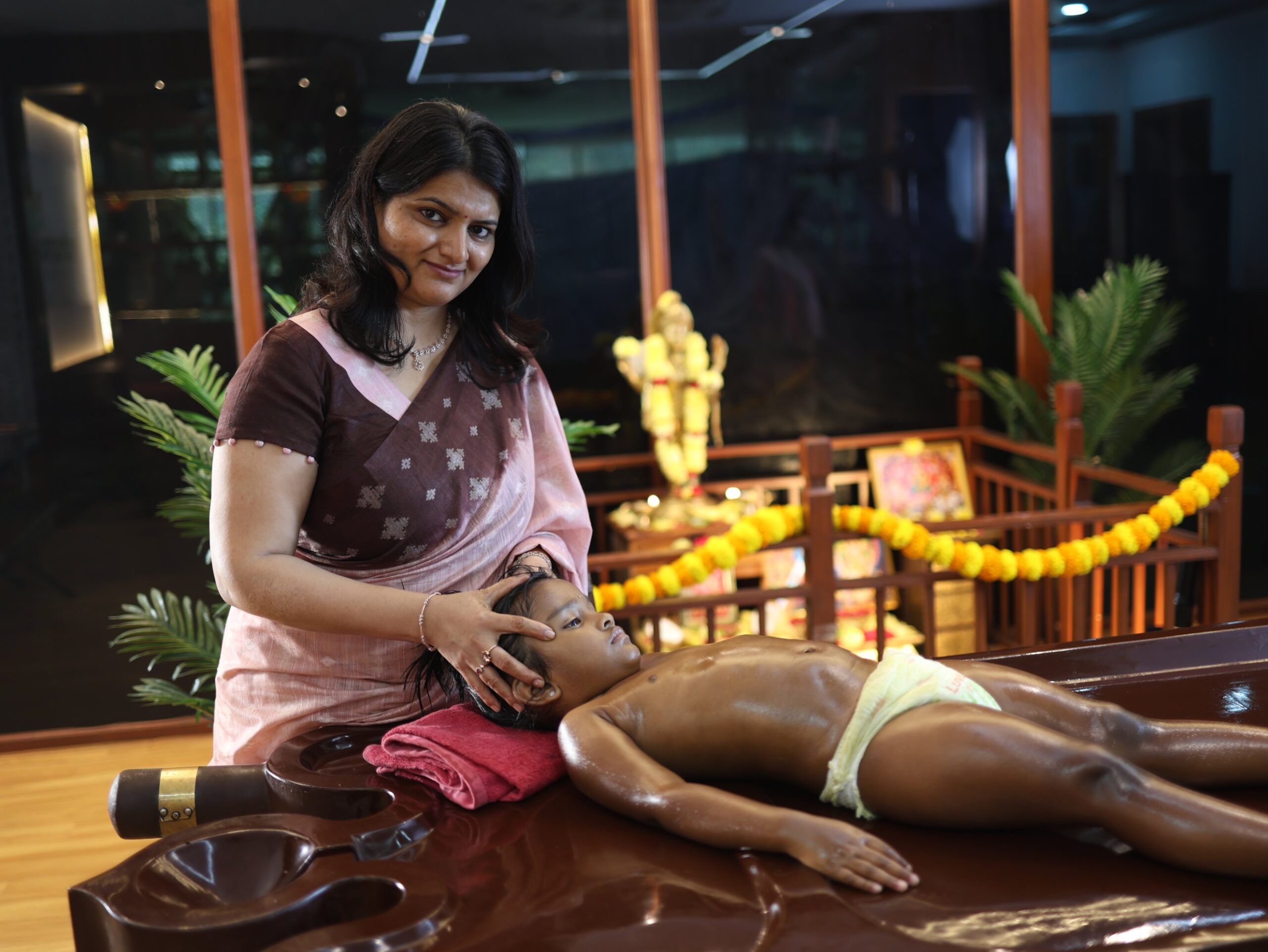
“Children with ADHD are often called naughty, lazy or careless. In my 15+ years, I have found that most of them are bright, warm and full of ideas. When the body settles, the mind follows.”Dr. Santhisree Bheesetti, Ayurvedic Child Neurocare Expert
The changes parents tell us about are often small, but they mean a lot at home:
What research says
You are not alone
children in India have ADHD, according to a review that pooled 19 Indian studies.
of children and teenagers around the world have ADHD.
In two small studies, regular massage helped children and teenagers with ADHD feel happier, fidget less and behave better in class.
A two-year study of high-school students also found that those who used digital media very often were more likely to develop ADHD symptoms later, one more reason to watch screen time at home.
- Chauhan A et al. Burden of ADHD in Indian children: a systematic review and meta-analysis. Indian J Pediatr. 2022. doi:10.1007/s12098-021-03999-9
- Polanczyk G et al. The worldwide prevalence of ADHD. Am J Psychiatry. 2007. doi:10.1176/ajp.2007.164.6.942
- Field TM et al. Adolescents with ADHD benefit from massage therapy. Adolescence. 1998. PubMed 9583664
- Khilnani S et al. Massage therapy improves mood and behavior of students with ADHD. Adolescence. 2003. PubMed 15053490
- Ra CK et al. Digital media use and later symptoms of ADHD among adolescents. JAMA. 2018. doi:10.1001/jama.2018.8931
Questions parents ask
ADHD: your questions
Is ADHD caused by bad parenting or too much sugar?
No. ADHD is a real difference in how the brain develops, and it is not caused by parenting. Sugar and screens do not cause ADHD, but they can make restlessness and poor focus worse, which is why we work on food and routine too.
Can Ayurveda help my child with ADHD?
In our experience, many children become calmer, more focused and sleep better with Ayurvedic care. Every child responds differently, so Dr. Santhisree first understands your child through Nadi Pariksha and a detailed history, and then plans care just for them.
My child is already taking ADHD medicine. Can we still come?
Yes. Please bring all prescriptions to the consultation, and do not stop or change any medicine on your own. Dr. Santhisree plans Ayurvedic care alongside your child’s current treatment, and any change to other medicines is made only with your child’s doctor.
From what age can you see my child?
We see children from about 18 months of age. You do not need a formal ADHD diagnosis to consult us. If you are worried about restlessness or poor attention, it is worth getting your child checked early.
My child has both Autism and ADHD. Can you help with both?
Yes, and this is very common. Because we look at all 11 functional brain systems, both are cared for together in one plan. You can also read about our Ayurvedic care for Autism.
Can we consult online?
Yes. We offer online consultations across India and for families abroad. Medicines are currently delivered within India only.
Related: Ayurvedic care for Autism · Speech delay · Sensory issues · Global developmental delay · Cerebral palsy
#DontWaitStartEarly
Help your child find a calmer rhythm
Meet Dr. Santhisree Bheesetti at our clinics in Hyderabad, Visakhapatnam, Bengaluru or Delhi, or online from anywhere.