
Echolalia: repetition of words, phrases, or questions – can be confusing and distressing for parents, especially when a child is otherwise able to speak. Many families ask whether echolalia is a speech delay, a behavioural issue, or part of autism. From an Ayurvedic perspective, echolalia is best understood not as absence of speech, but as a problem of speech regulation.
This article explains echolalia through Ayurveda, connects it with modern understanding, and outlines how Ayurvedic care approaches speech regulation in children.
What Is Echolalia?
Echolalia refers to the repetition of words or phrases spoken by others or previously heard, often without clear communicative intent. It may appear as:
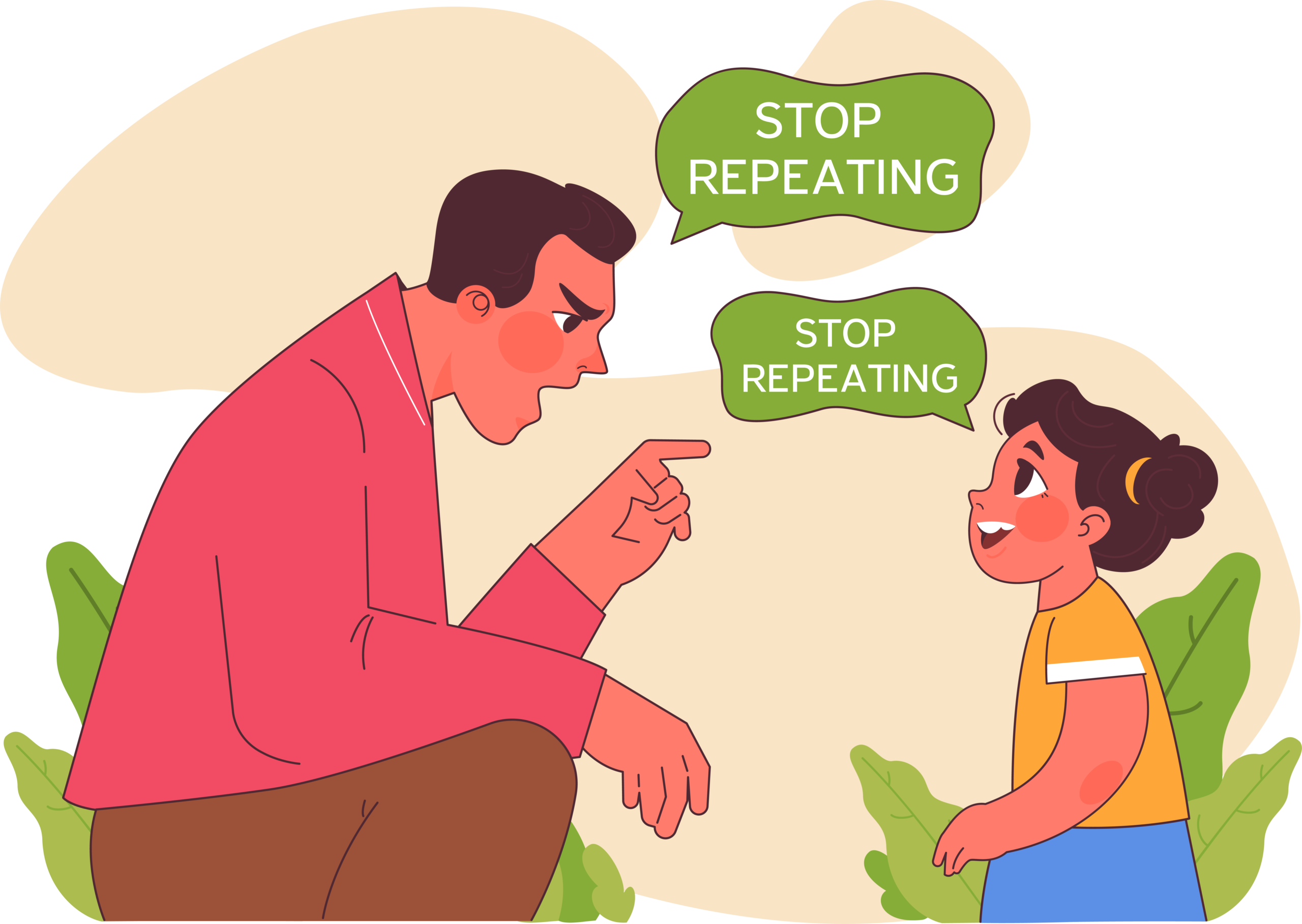
- Repeating questions instead of answering them
- Echoing TV dialogues or memorised phrases
- Asking the same question repeatedly
- Automatic repetition during stress or excitement
Echolalia is commonly seen in children on the autism spectrum, but it may also occur in children with speech regulation difficulties, sensory processing challenges, or delayed expressive control.
Importantly, echolalia does not mean a child cannot speak. In most cases, speech is present—but control over speech is impaired.
How Ayurveda Understands Echolalia
In Ayurveda, speech and expression are governed by Udāna Vāta, a subtype of Vāta Doṣa responsible for:
- Speech initiation
- Expression and clarity
- Modulation and control of verbal output
When Udāna Vāta functions smoothly, speech is purposeful, regulated, and context-appropriate.
Kapha Āvaraṇa of Udāna Vāta
Echolalia is commonly understood in Ayurveda as Kapha āvaraṇa (obstruction) of Udāna Vāta.
Kapha, especially when associated with Āma, carries qualities of:
- Heaviness
- Rigidity
- Inertia
- Repetition
When Kapha obstructs Udāna Vāta:
- Speech impulse is generated
- But flow is not smooth
- Speech becomes repetitive, rigid, or automatic
- Pausing and stopping become difficult
Thus, echolalia reflects active speech trapped in a loop, not lack of speech ability.
Why Repetition Happens Instead of Communication
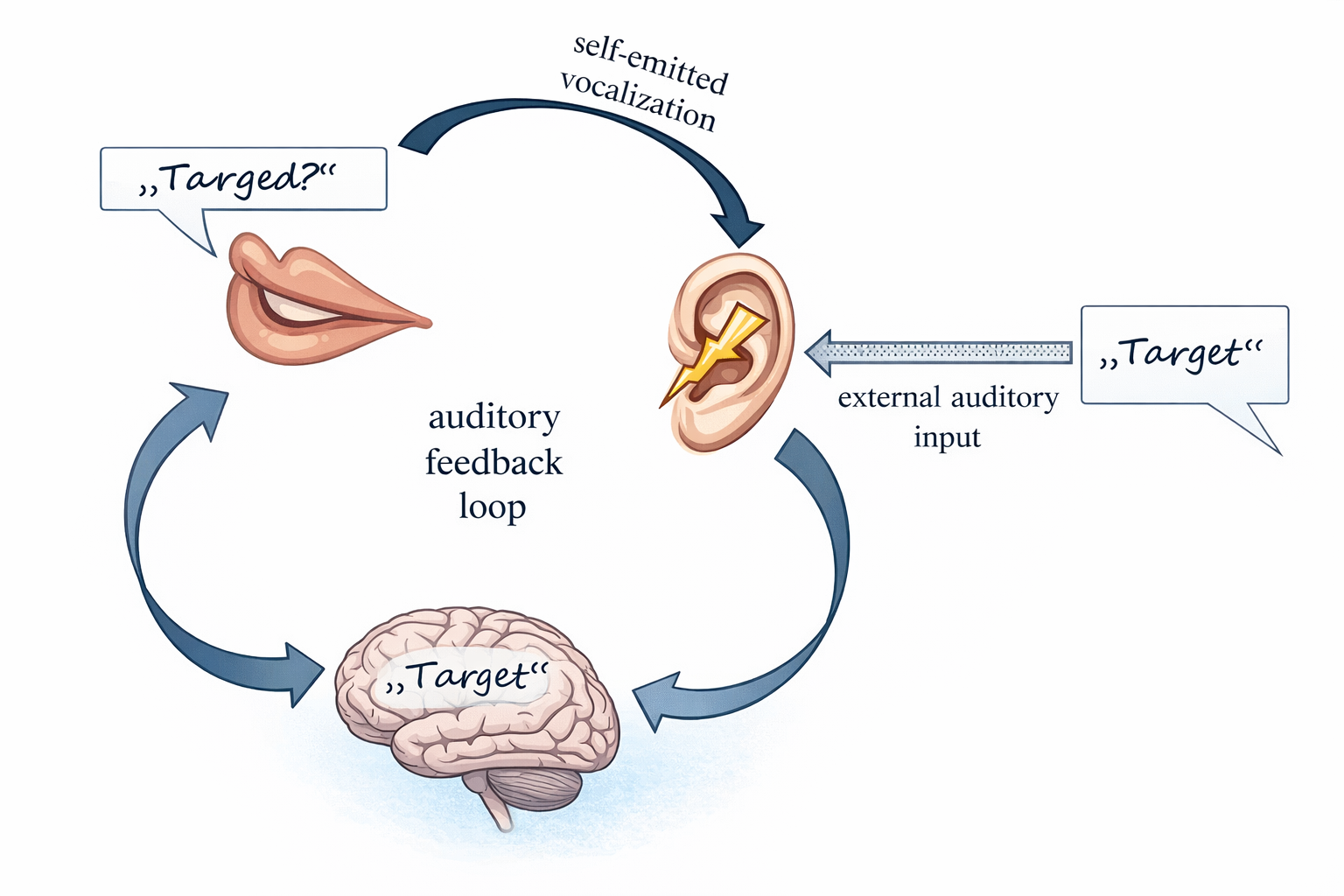
From an Ayurvedic standpoint:
- Vāta remains active, even under obstruction
- Obstructed Vāta tends to function in loops
- Repetition becomes the default pattern
From a modern neurobehavioral view, this aligns with:
- Reduced inhibitory control
- Perseverative verbal output
- Difficulty modulating speech once initiated
Ayurveda and modern science converge on one point: The problem is regulation, not stimulation.
Is Echolalia Always a Problem?
Not always. In early language development, echolalia can be a transitional phase. However, when echolalia:
• Persists beyond expected developmental stages
• Interferes with functional communication
• Dominates verbal output
…it suggests impaired speech regulation, which may benefit from targeted intervention.
Ayurvedic Approach to Echolalia
Ayurvedic management of echolalia focuses on:
- Reducing Kapha and Āma obstruction
- Supporting smoother Udāna Vāta function
- Restoring balance rather than forcing speech
This approach may include:
- Dietary regulation to reduce Kapha and Āma load
- Lifestyle structuring to support rhythm and regulation
- Context-appropriate communication practices
- Ayurvedic formulations designed to support speech regulationAs obstruction reduces, speech regulation strengthens, and in some children, speech begins to express more freely, clearly, and purposefully.
Where Does Vaakkshuddhikaran Kwath Churna Fit In?
Vaakkshuddhikaran Kwath Churna is a specialised Ayurvedic formulation developed to support speech regulation in children with echolalia and repetitive speech patterns.
It is designed to:
- Support reduction of Kapha–Āma obstruction
- Facilitate balanced Udāna Vāta function
- Help reduce rigid, automatic repetition loops
- Encourage clearer pauses and purposeful verbal expression
The goal is not to force speech, but to restore balance, allowing speech to emerge naturally according to the child’s readiness.
This formulation is clinically used at Sree Prathama Ayurvedam as part of an integrative pediatric neuro-care approach.
Which Children May Benefit from an Ayurvedic Perspective on Echolalia?
Children who may benefit include those who:
- Repeat words or questions frequently
- Rely heavily on scripted language
- Are hyperverbal but poorly regulated
- Have delayed expression of needs despite understanding language
- Show speech suppression linked to Kapha dominance
Each child must be assessed individually, considering constitution and clinical presentation.
Key Takeaway
From an Ayurvedic perspective, echolalia is not a failure of speech. It is a sign of speech that is active but poorly regulated.
By addressing Kapha āvaraṇa of Udāna Vāta and restoring internal balance, Ayurveda aims to support calmer, clearer, and more purposeful communication, rather than simply increasing speech output.





0 Comments